

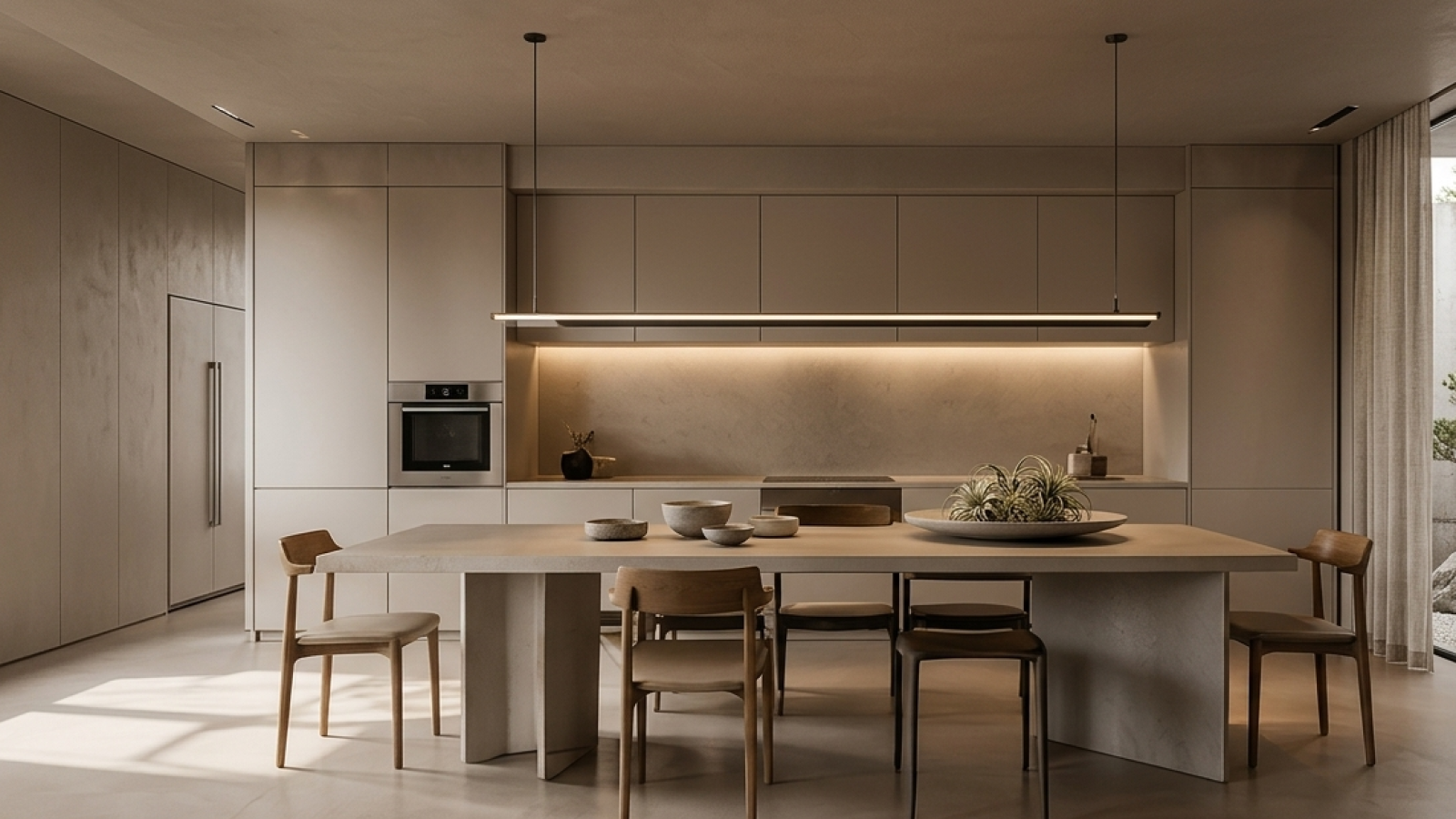
Interior Design Trends 2026: 6 Main Directions That Designers Are Already Choosing
For many years, interiors strived to be perfect: calculated, neat, universal. Today, the emphasis has noticeably shifted. Living spaces are no longer forced to fit abstract standards – they are assembled around specific people. Around their habits, rhythms, biorhythms, the way they prefer to greet the morning and rest in the evening.
At the intersection of architectural thinking, emotional expressiveness, and technology, a new palette of solutions is forming, where personalization becomes the main value.
This is precisely why conversations about how to choose an interior style increasingly go beyond aesthetics. We're talking about everyday scenarios. The trends of 2026 are not about an eye-catching picture, but about mental comfort: how deeply you resonate with your home.
Quiet Minimalism: Less Is Not About Emptiness
In 2026, minimalism in interiors ceases to be strict and somewhat cold. It becomes softer and much deeper in feel. There are no random things here, but there is no sense of sterility either – the space comes alive through a complex interplay of textures and proportions.
Built-in furniture takes center stage. It hides the excess, evens out the lines, creates a sense of order effortlessly. Cabinets dissolve into walls, kitchens become almost invisible.
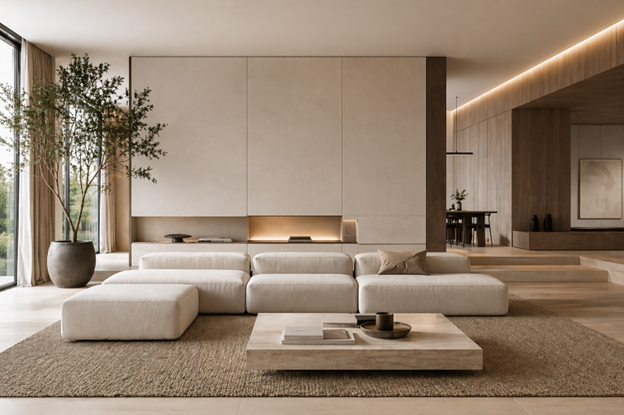
Light wooden panels, vertical rhythm of panels, even planes that conceal functional filling – this is how the image of new minimalism is formed: calm, composed, and surprisingly cozy.
People choose this style not for the sake of fashion. It suits those who value a sense of clarity, when nothing distracts and everything works exactly as needed.
Evolution of Scandinavian Aesthetics: Warm Nordic Modern
Scandinavian interior style is undergoing profound transformation. It moves away from the familiar "white base" and becomes warmer, calmer, and more complex in feeling.
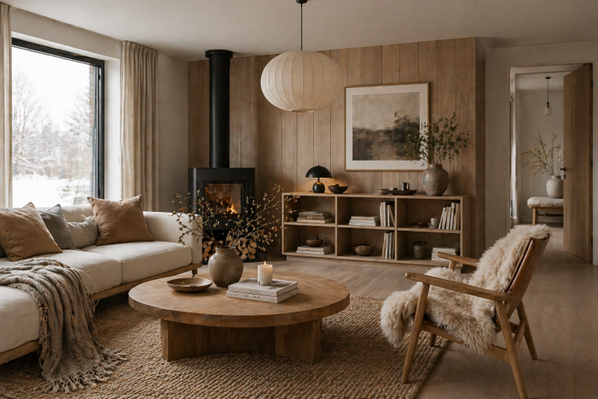
Natural wood dominates in finishes, raw textures and smooth lines are in demand. Objects with character – artisan ceramics, hand forging, and unique decor – free the home from "catalog blandness." This is no longer a showroom, but a living place of power, where imperfect materials emphasize their authenticity.
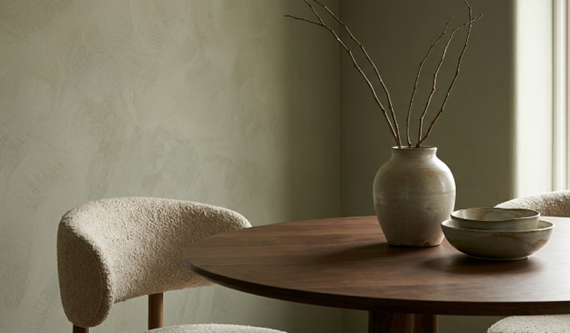
Manifesto of Depth: Working with Color
Color in 2026 is no longer a background, but a full-fledged tool. Through it, you set the atmosphere, manage the perception of space, and zone the room.
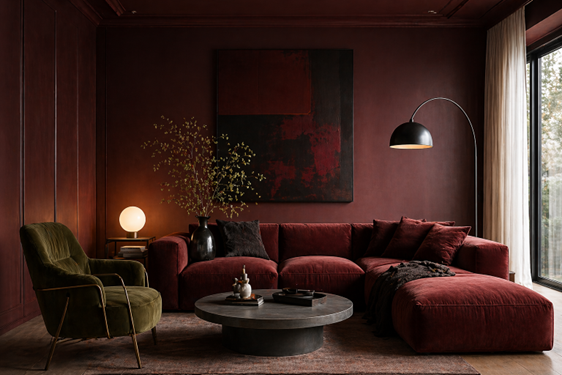
If we talk about trendy interior colors for 2025–2026, the focus is on deep, saturated shades: wine-burgundy, tobacco, coniferous green, terracotta. They make the interior more "composed" and visually expensive, but without overwhelming it. Designers actively use the "color drenching" technique – total painting of walls, ceiling, and carpentry in one color, which allows you to blur boundaries and create a cocoon effect.
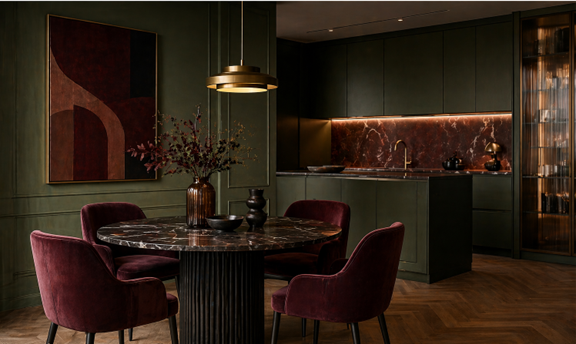
An interesting point is working with surfaces. Light gloss, soft reflection, delicate glow – all this adds depth. The interior begins to change throughout the day, and this creates a sense of dynamism.
The Tactility of Comfort
In 2026, textiles in interiors take center stage. Designers are reconsidering their role: this is not just decor, but the emotional code of the space.
Throws, rugs, curtains, upholstery – everything evokes the desire to touch. Complex textures, soft surfaces, natural materials are in demand. The interior ceases to be purely visual – it becomes sensory.
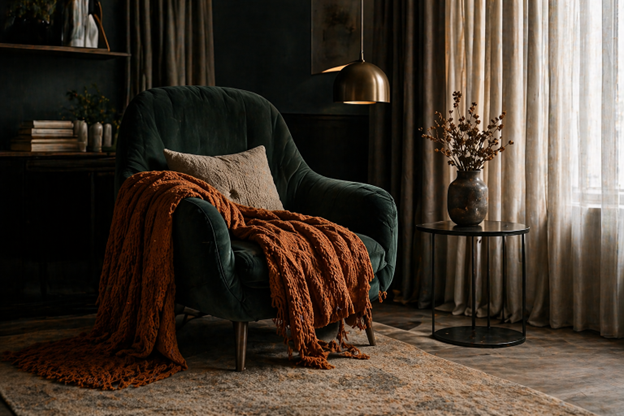
The combination is especially important: smooth + rough, dense + light. Because of this, the space looks deeper and more interesting, even if it contains a minimum of objects.
Professionals emphasize that premium quality of an interior solution is read precisely through tactile surfaces – from a plush rug to smooth silk bedspreads.
Small Space – Big Possibilities
Modern studio design is no longer a compromise, but a separate discipline. Small areas require precise solutions, and this is exactly where designers show maximum skill.
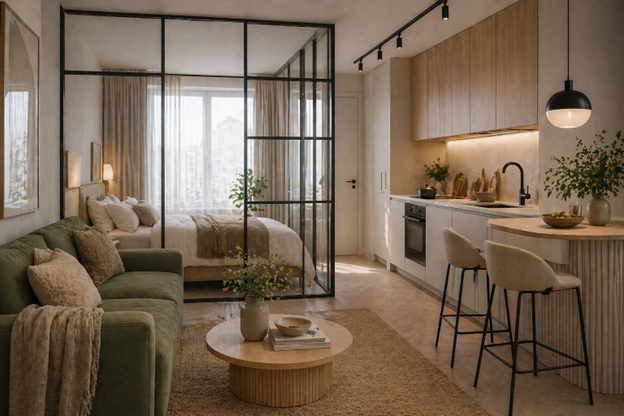
Specialists actively use tinted glass partitions, rotating modules, hidden kitchens, and podiums. Transformable elements and sliding doors allow you to visually expand the boundaries, turning compact living meters into a full-fledged ergonomic space.
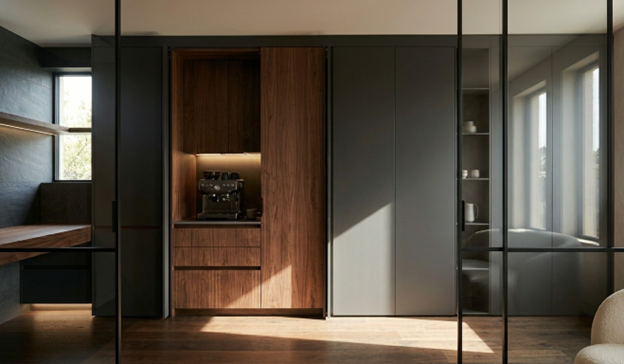
Everything serves one purpose – to make the apartment feel bigger than it is. And this is precisely the case where good design truly changes the quality of life.
Personal Code: Home as a Reflection of "I"
The key priority of 2026 is personalization. Interior ideas no longer emerge from universal selections – they form around the habits of a specific person. Architects create zones for rituals: mini-libraries, quiet work niches, meditation corners, collectible shelving, atmospheric bathrooms overlooking nature, private lounge areas. All this makes the project individual, like a custom-tailored suit.
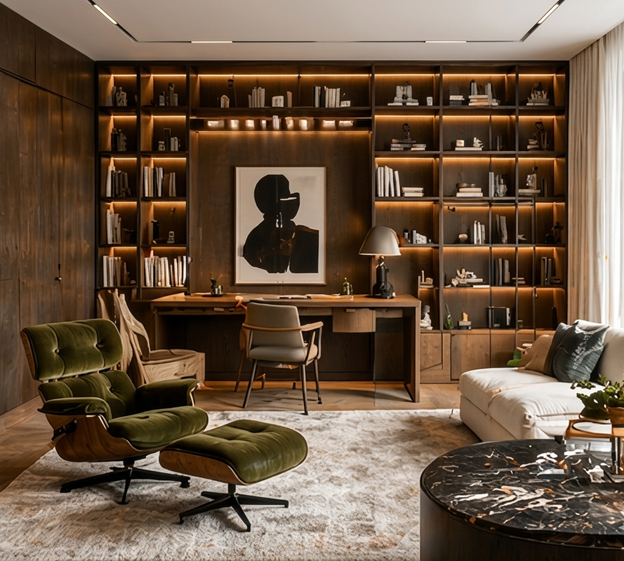
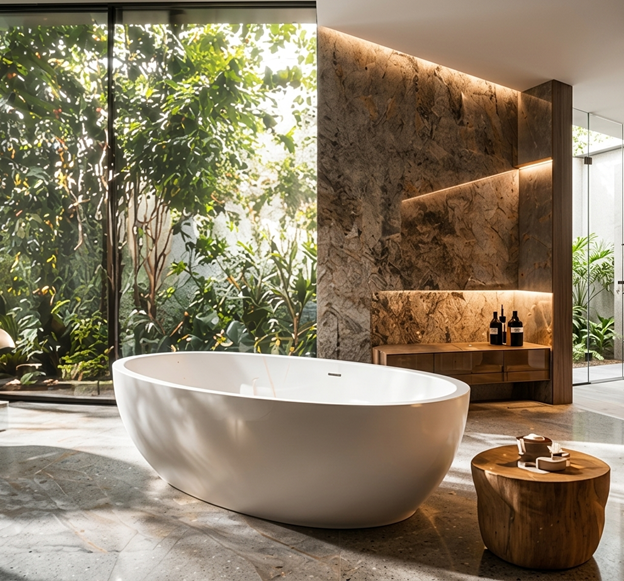
Compositional clarity is important here: balance of verticals and horizontals, work with light, tactile variety. Personality ceases to be extravagance – it becomes a conscious need and the main direction of interior design thinking.
Interior as a Feeling
To summarize, it becomes clear: modern interior is not made up of separate techniques, but of a general feeling – how calm, comfortable, and free it is.
The space simply becomes part of life – not a separate picture, but its natural background.

No comments yet.