

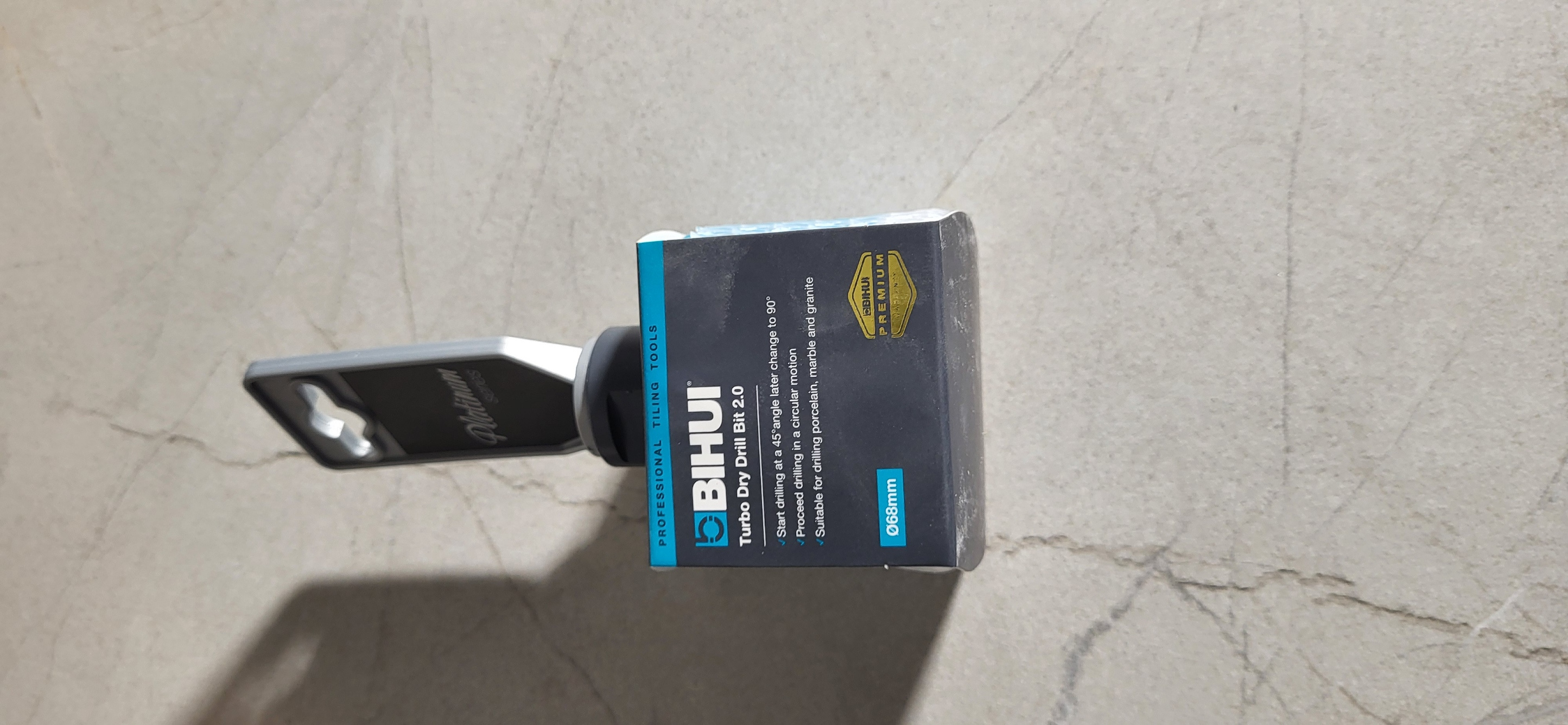
BIHUI Turbo Dry Drill Bit 2.0 with a diameter of 68 mm from the Platinum series. I'm sharing how it performed in practice.
Why exactly 68 mm and why dry cutting
68 mm is the standard diameter for a European wall outlet box. If you're planning a block of two or three outlets, you need to drill in a row with 71 mm spacing between centers — and each hole must be even, without chips on the edge, otherwise the outlet box won't sit properly later, and the tile itself will look sloppy.
A dry crown bit (Turbo Dry) was a matter of principle for me. Wet cutting gives a perfect cut, but requires water supply, which means dirt, hoses, and the risk of flooding neighbors below if you're working on a finished renovation. With a dry bit, I drill right on site without a single drop of water, and only a little dust falls on the floor.
What's in the box and what it looks like
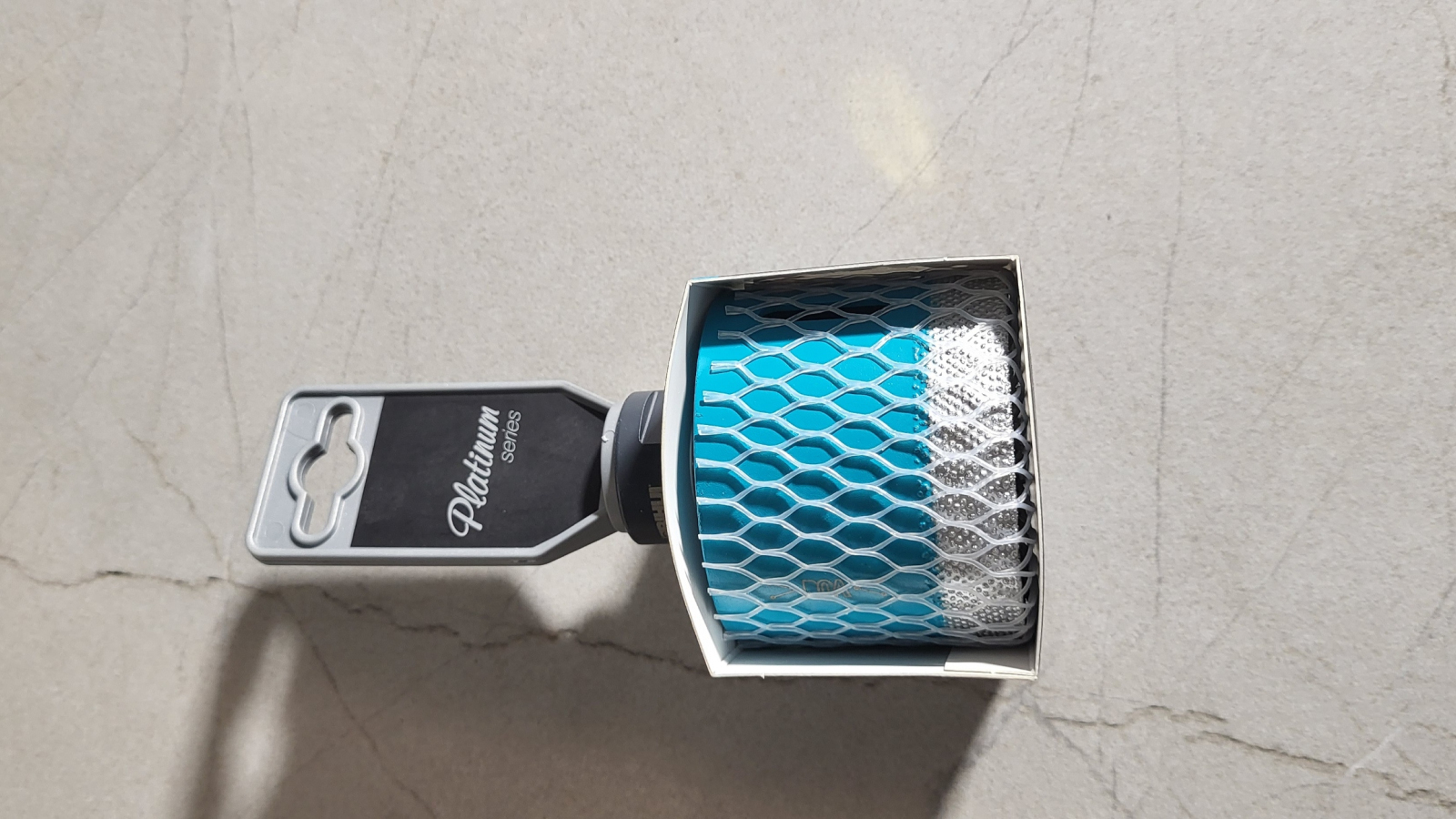
The packaging is a neat cardboard box with a plastic tab for hanging in the store. The crown bit itself lies in a protective mesh, which is correct: the diamond edge doesn't like impacts and friction with other tools.
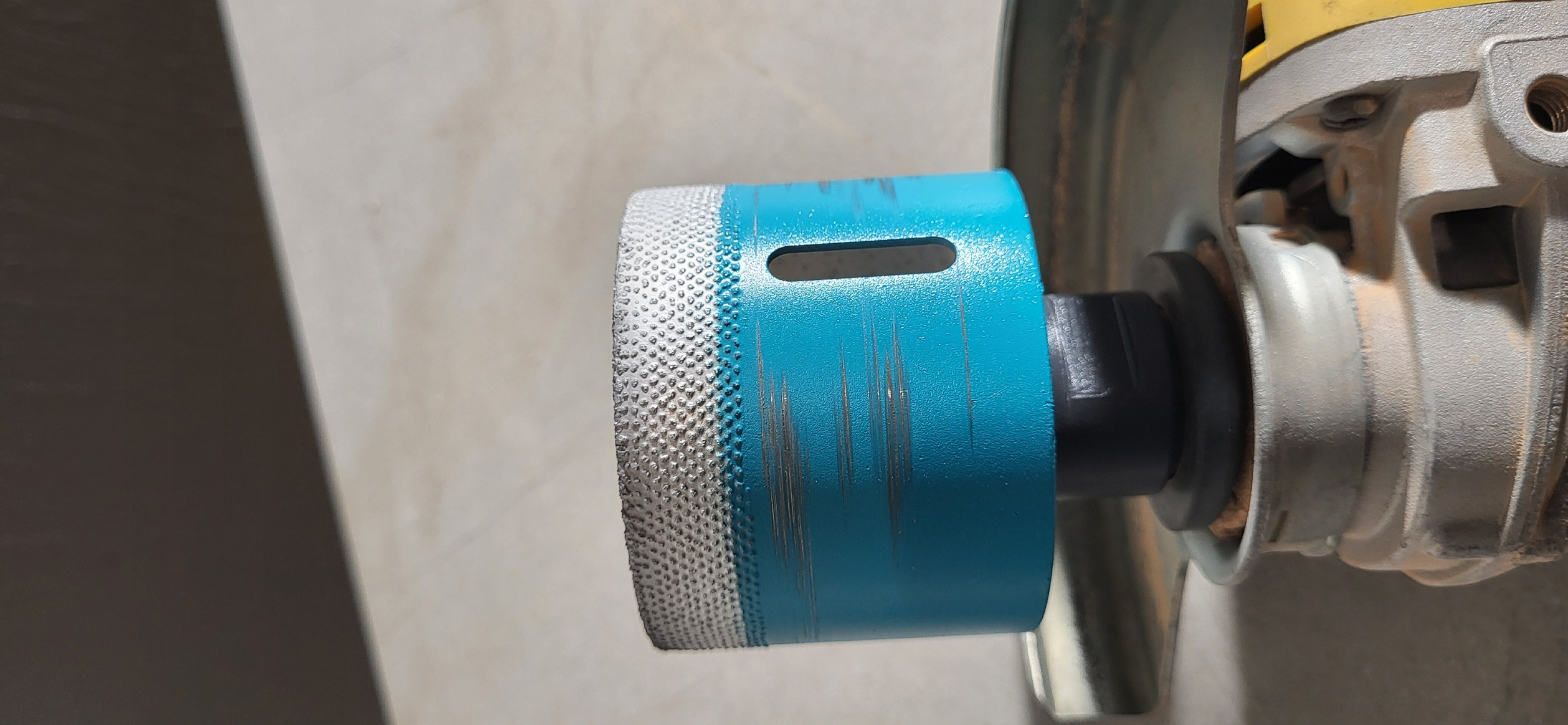
The working part itself looks serious: a wide band of diamond coating, grainy texture on the face, a neat shank fit. The shank has M14 threading — meaning the crown bit is installed on a angle grinder, not in a regular drill chuck. This is an important point I'll return to below.
What tool I worked with
I used my DeWalt angle grinder (a standard 125 mm grinder). The crown bit screws directly onto the spindle instead of a disc. The grinder has high RPMs — about 10,000 per minute — and the BIHUI crown bit works in its standard mode at this speed.
I apply the crown bit at approximately 45° angle to the tile — the edge touches the surface with a narrow arc, not with the entire face.
I smoothly align the crown bit vertically (90°) and continue drilling with the entire circumference.
I make light circular movements — I don't press, but rather "walk" the crown bit around the contact area. This allows dust to escape and prevents the crown bit from overheating.
What I got in the end
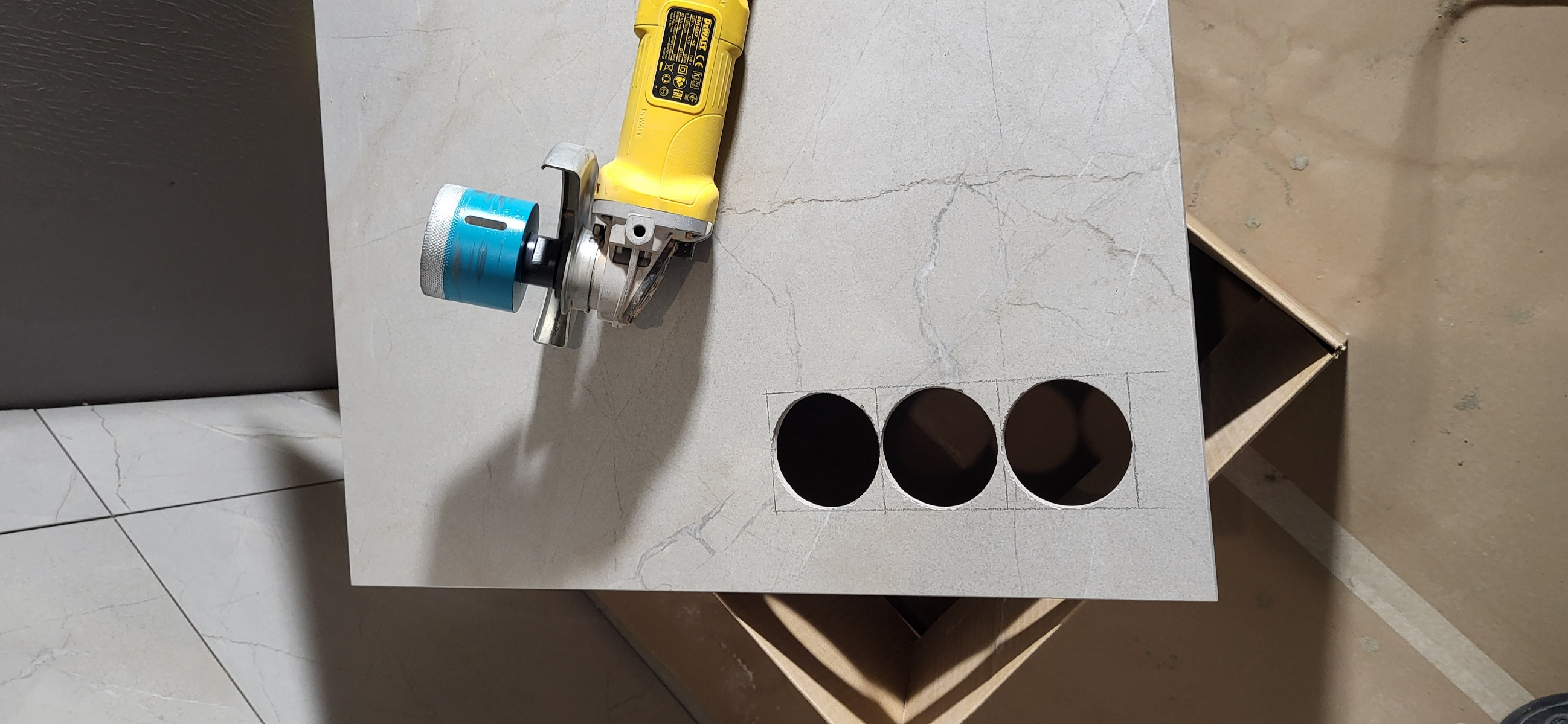
On one porcelain stoneware tile, I easily drilled three holes in a row for an outlet block — even, with clean edges, no chips on the front side. The pencil marks I made before working remained untouched — the crown bit followed the contour exactly.
Time per hole is approximately 2–3 minutes with medium pressure and no overheating. For comparison: my previous cheap crown bit struggled with one hole for eight minutes and then gave up.
Pros and cons based on the work
Pros
Actually cuts porcelain stoneware, doesn't just polish it
Dry work - no water, hoses, or wet cleanup
The edge holds up: after three holes, the coating is in the same condition as when it came out of the box
Clean edge - outlet boxes fit without additional work.
Cons
Requires an angle grinder with M14 threading — won't fit a regular drill
Price is above average on the market
Need to work with a vacuum
My verdict
BIHUI Turbo Dry Bit 2.0 68 mm is the case where "professional tool" really means professional, not just a "Premium" label on the box. For drilling porcelain stoneware for outlet boxes, I now recommend only this class of equipment. Cheap crown bits on smooth porcelain stoneware are wasted money, stress, and time, especially when the tile is already on the wall and you have only one chance to get it right.
If you're planning a bathroom or kitchen renovation with porcelain stoneware on the walls — budget for such a crown bit right away. It will be cheaper in the end.

No comments yet.