

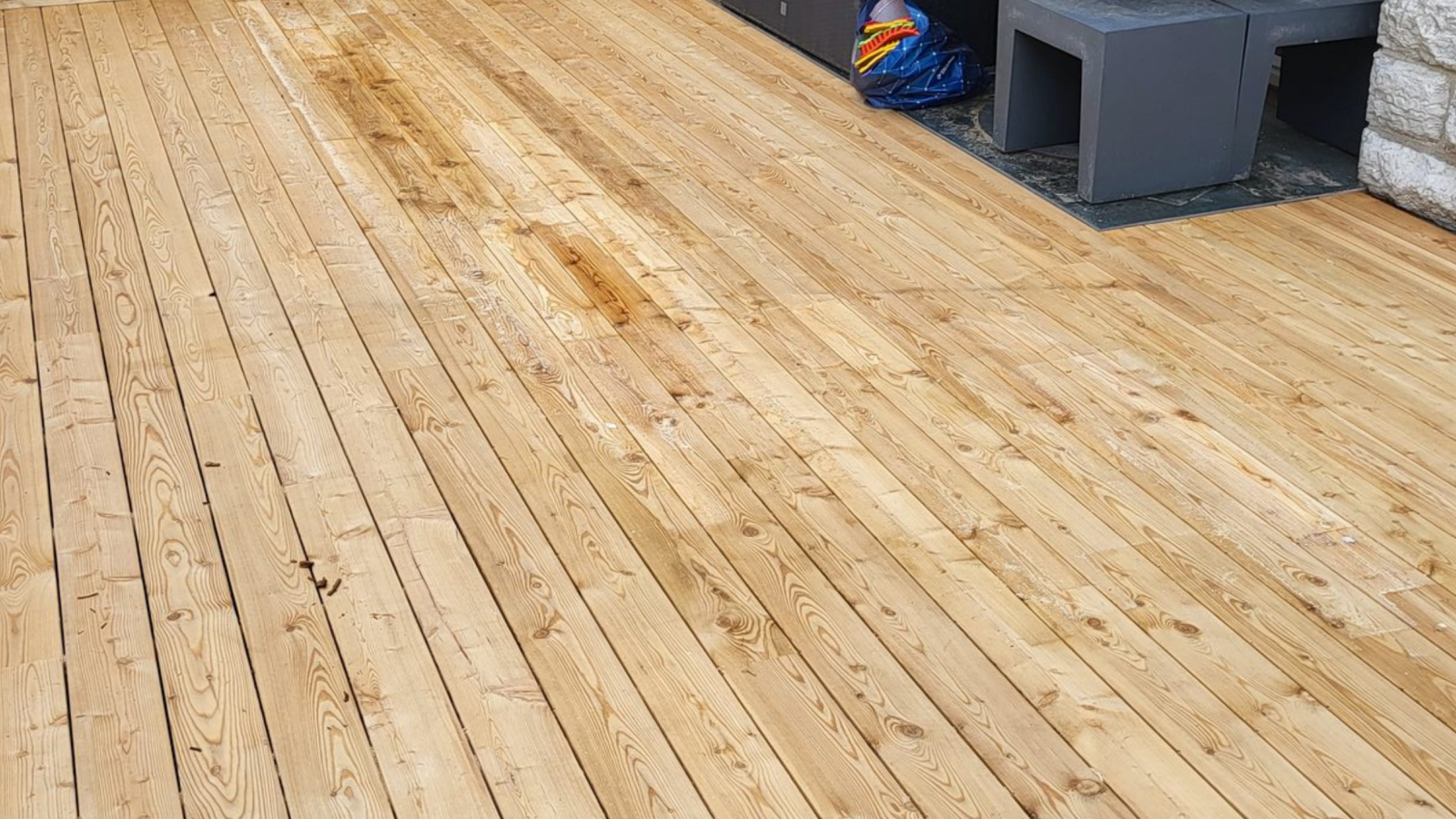
Dear readers! Today I want to share a detailed photo report about the complete reconstruction of a terrace in Tallinn.
I was approached with a question: they had such a terrace that needed updating. At first, they thought it would be enough to replace just the decking itself, leaving the supporting structures untouched. But after inspection, it turned out that the main supporting double beam had rotted. We had to replace it. As for the reason why it rotted, try to guess for yourselves. Write your versions in the comments, and I'll give you the correct answer after some time.
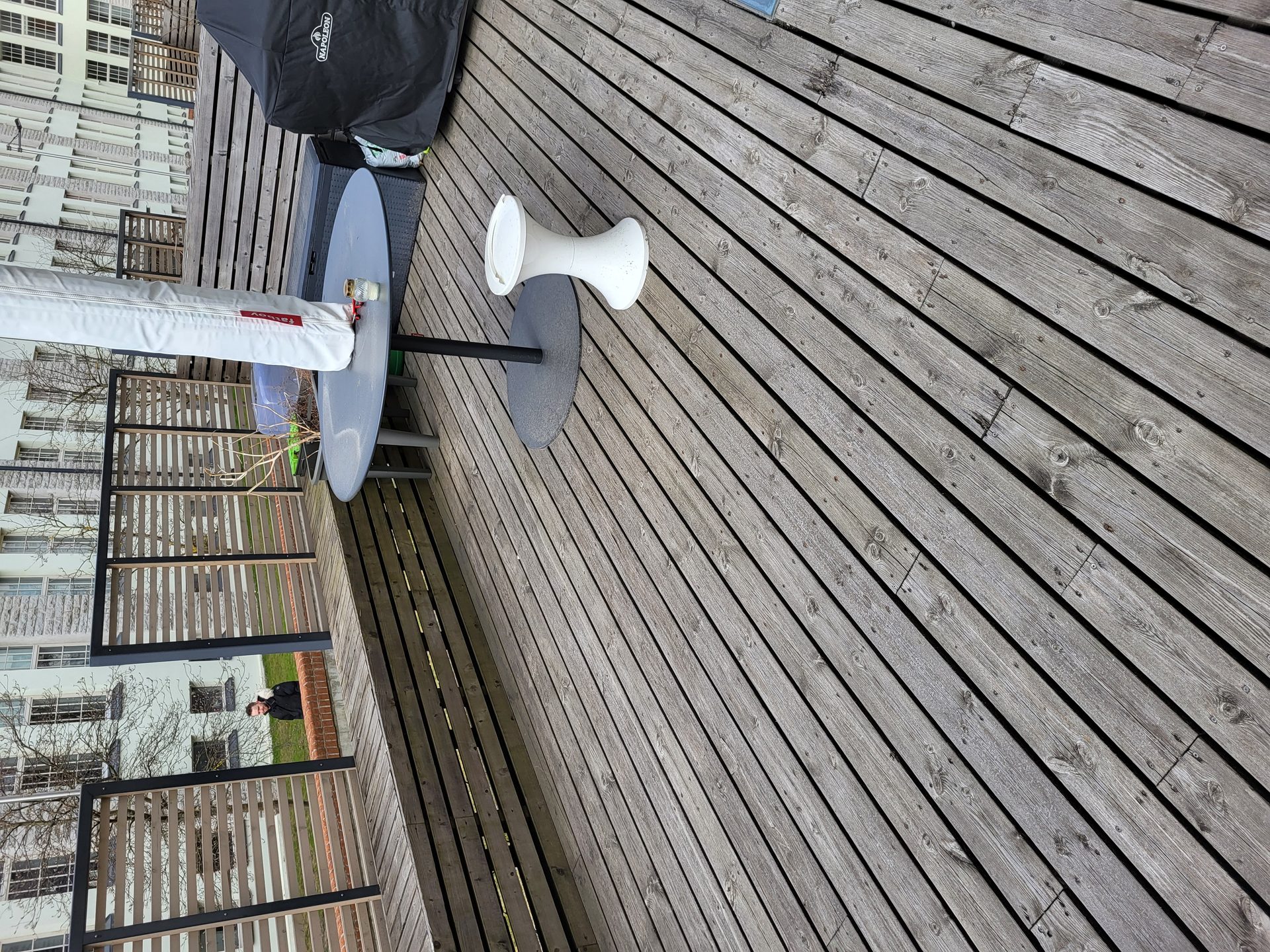
I started dismantling the old decking.
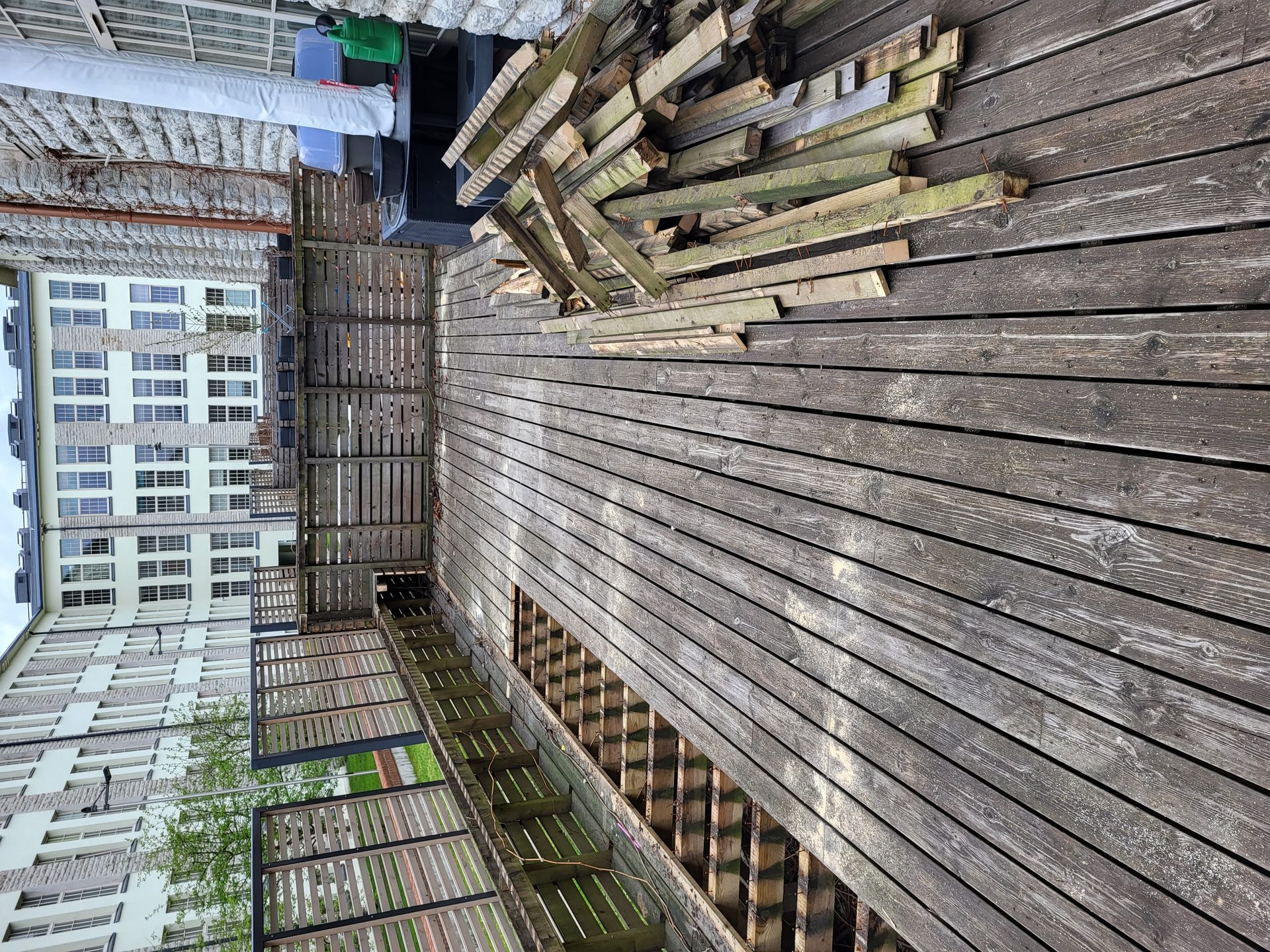
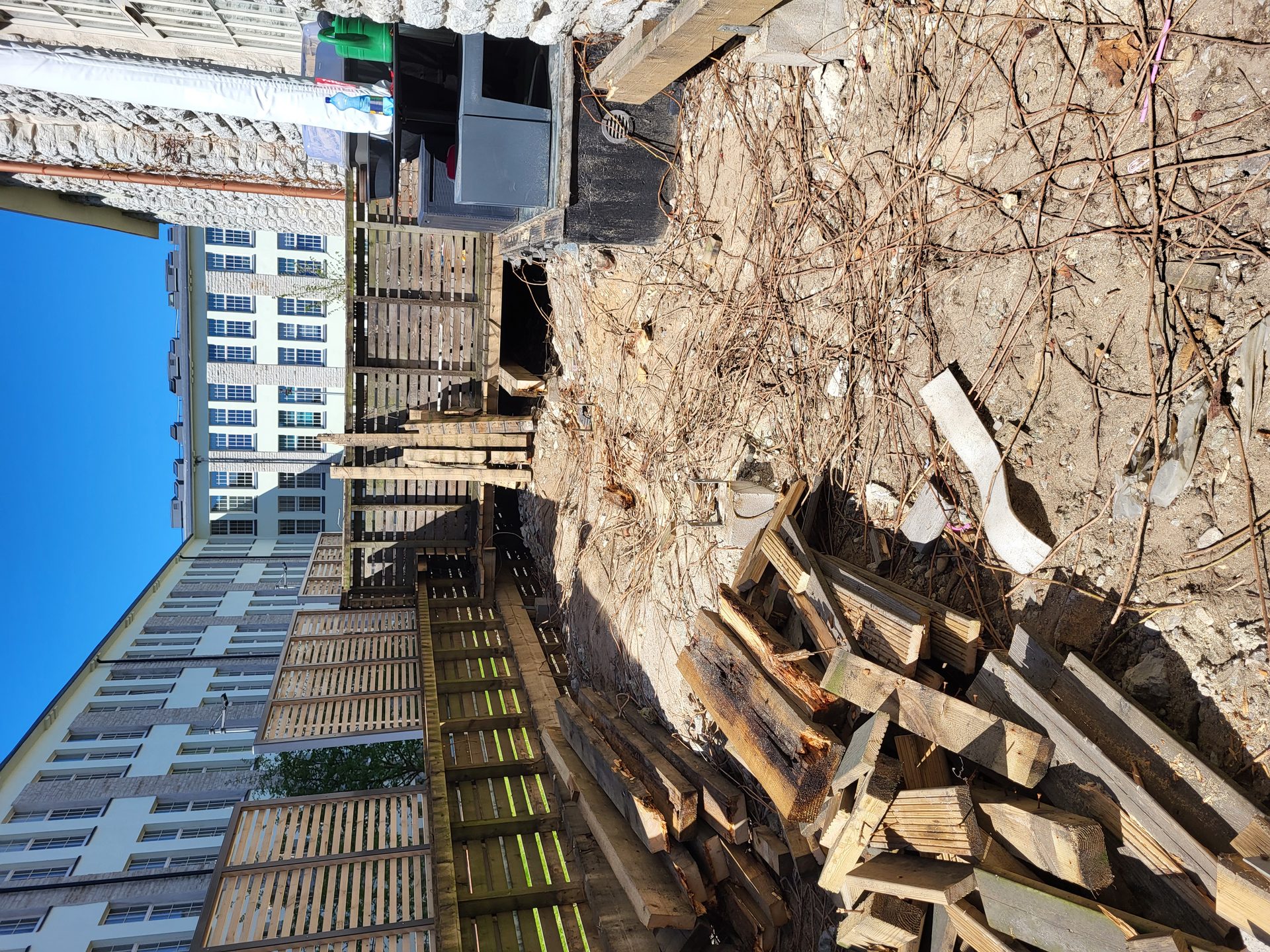
We proceed to install new edge boards.
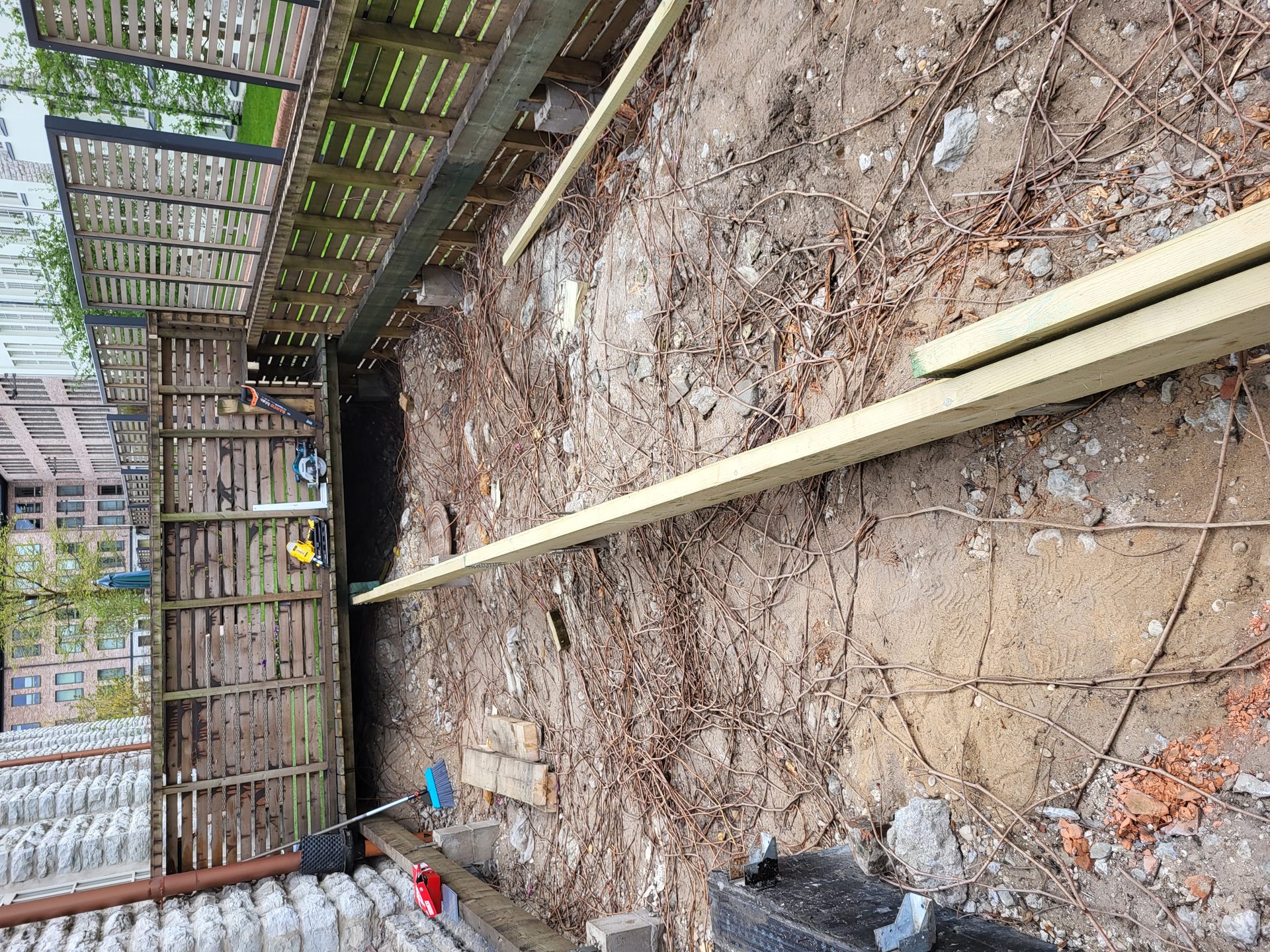
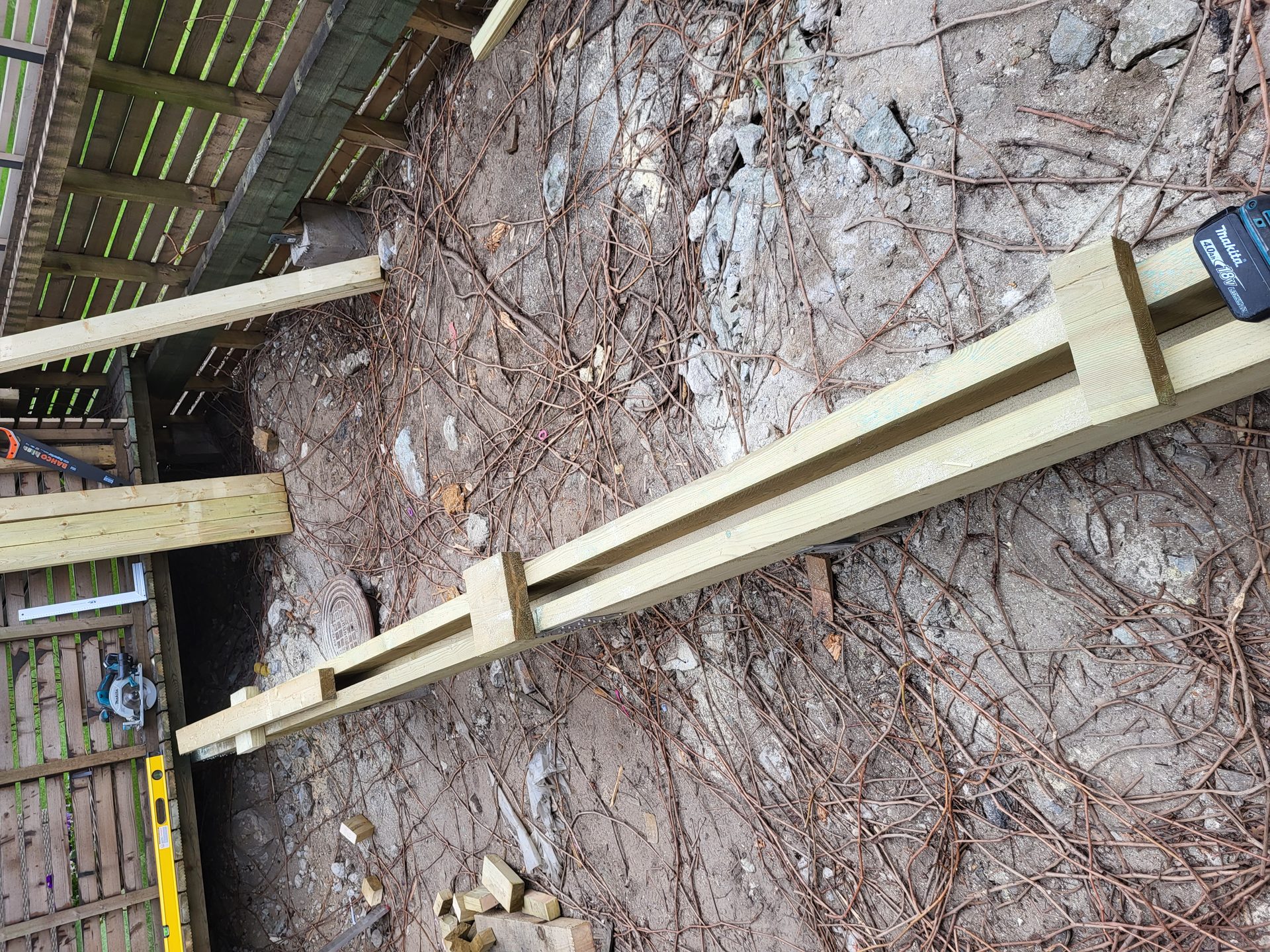
In the center of the terrace, a double support beam was installed along its entire length.
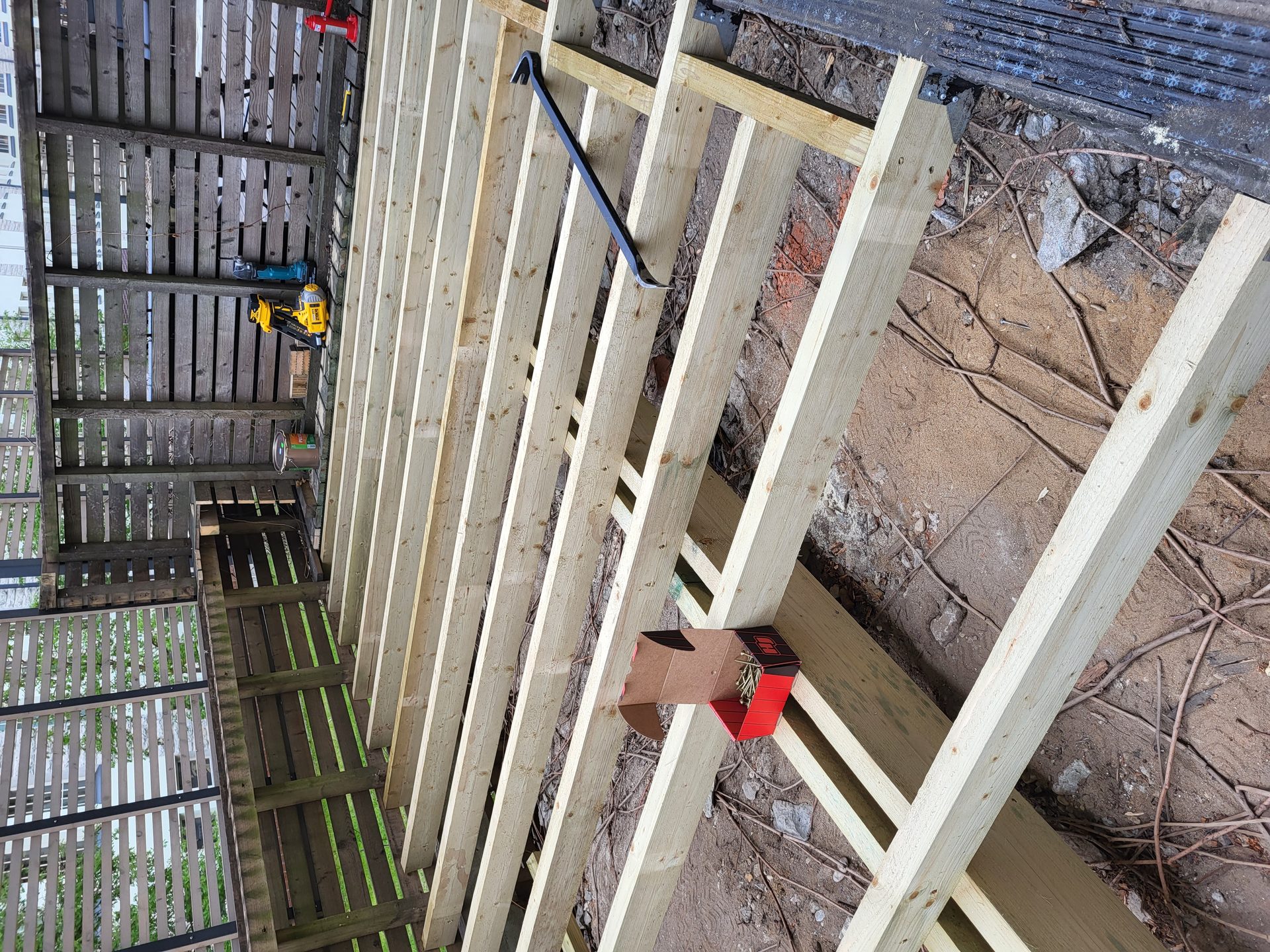
We install the joists for the terrace after the entire support frame was assembled.
Then the question arose of choosing material for the new decking boards. I recommended using larch instead of treated pine. The client decided to go with larch — I'll explain why now.
Larch is a coniferous tree, but unlike pine or spruce, it sheds its needles in winter. It grows mainly in Siberia and northern regions, where the harsh climate makes the wood particularly dense and resinous. It is precisely in this density that the main secret lies: in terms of resistance to rot and moisture, larch approaches oak, and in some parameters even surpasses it. It's no accident that the pilings of Venice, driven into the water more than a thousand years ago, still support the city — they are made from larch.
Now about why it's better than treated pine for a terrace. Treated pine is essentially soft wood that has been infused with chemicals under pressure to protect it from fungi and insects. The protection works, but there are nuances: over time, the treatment washes out, the boards start to warp, crack, and become "fuzzy" in the sun, and you can easily get splinters walking barefoot. Plus, the mere fact that you're walking on wood saturated with biocides doesn't appeal to me personally — especially if there are children or pets on the terrace.
Larch protects itself. Its wood has a high content of gum and natural resins, which work as a built-in antiseptic — fungi practically can't take hold of it, and insects avoid it too. Over time, under the influence of ultraviolet light, it acquires a noble silvery-gray shade (if not treated with oil), and becomes only denser and harder. The service life of Siberian larch decking without serious maintenance is 25-30 years, whereas treated pine rarely lasts more than 10-15, after which it needs to be replaced. In terms of years of use, larch even turns out to be cheaper, not to mention that it looks completely different — it's full-fledged natural wood with pronounced texture, not a faceless pine board.
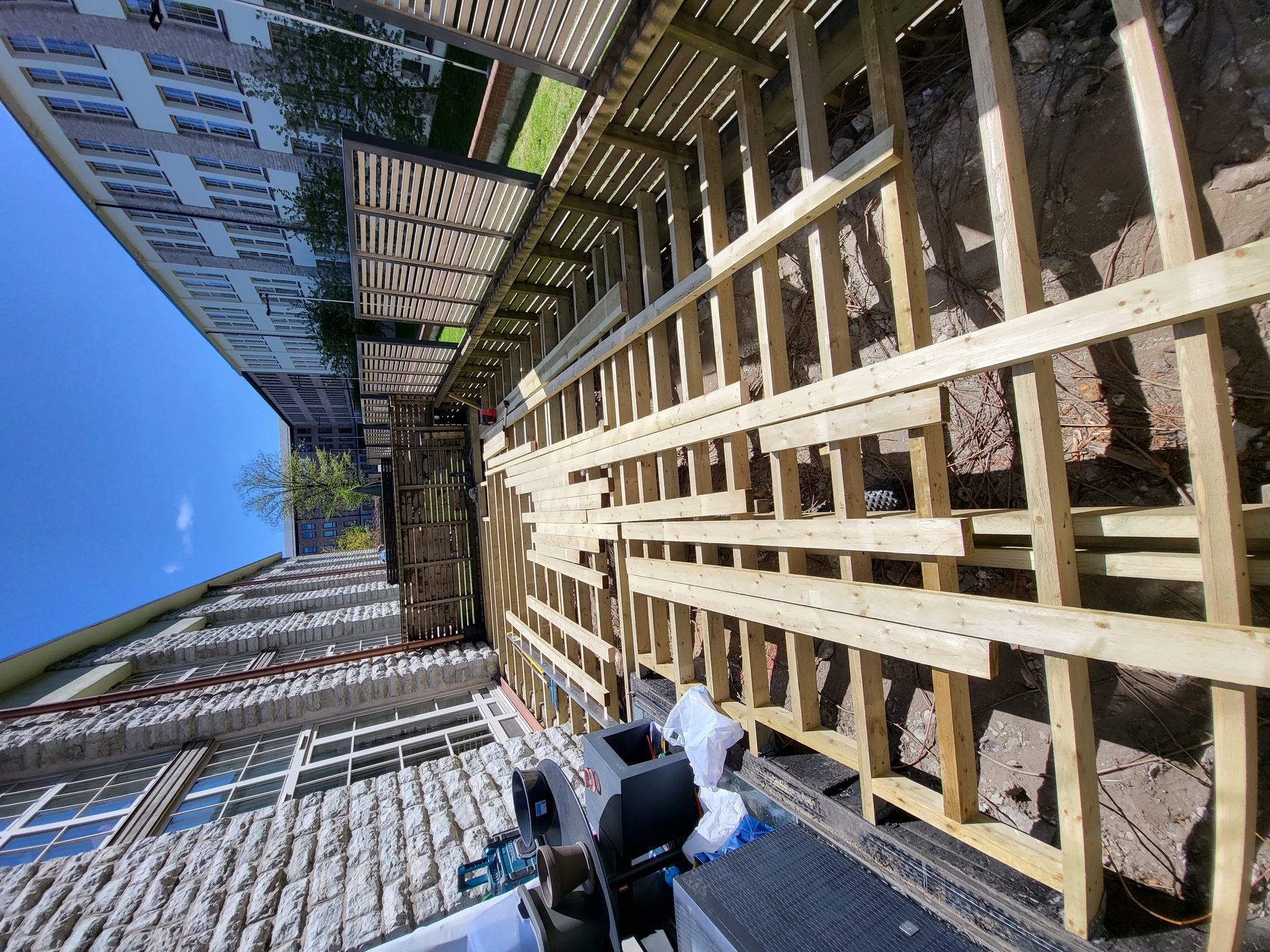
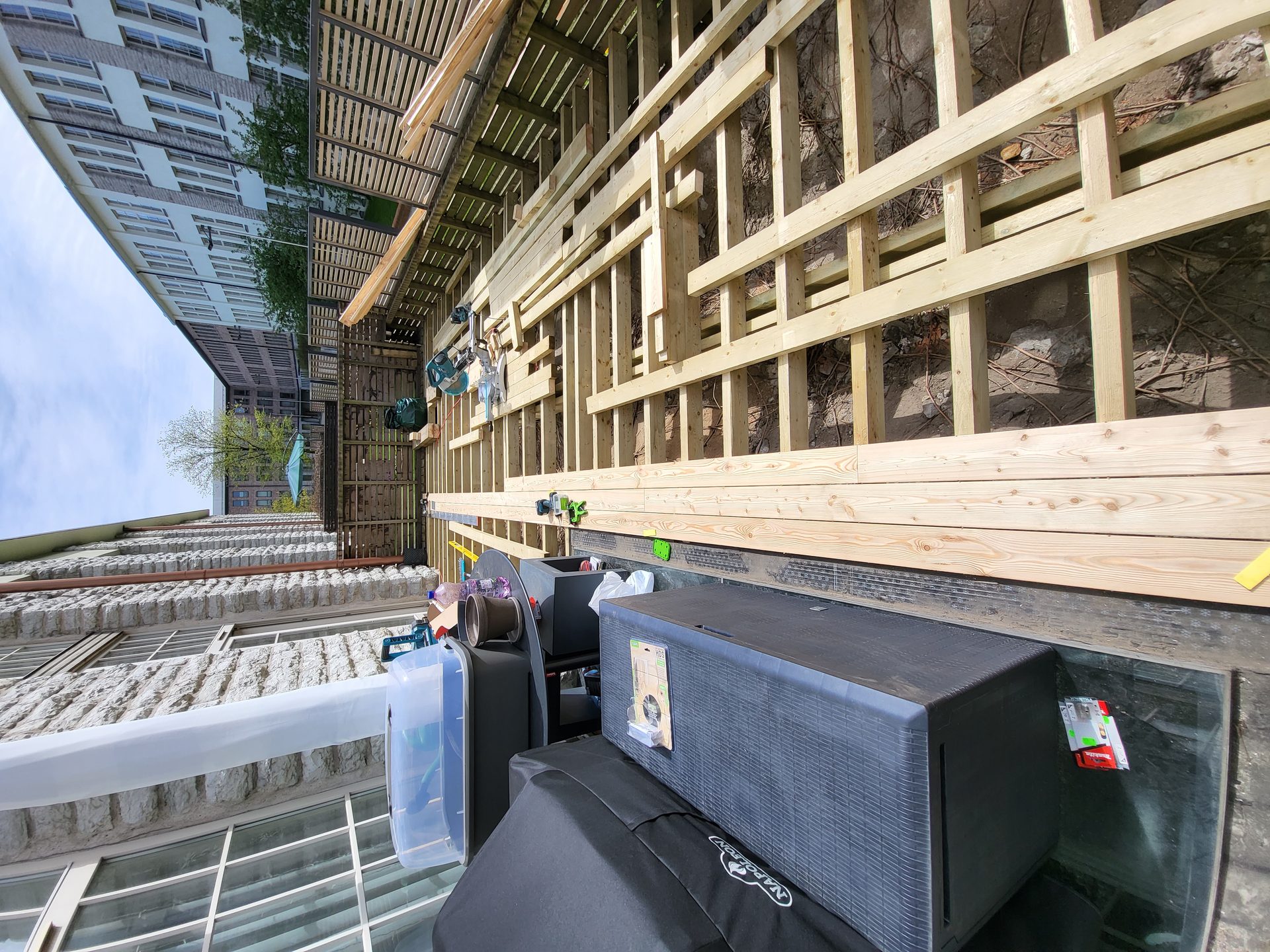
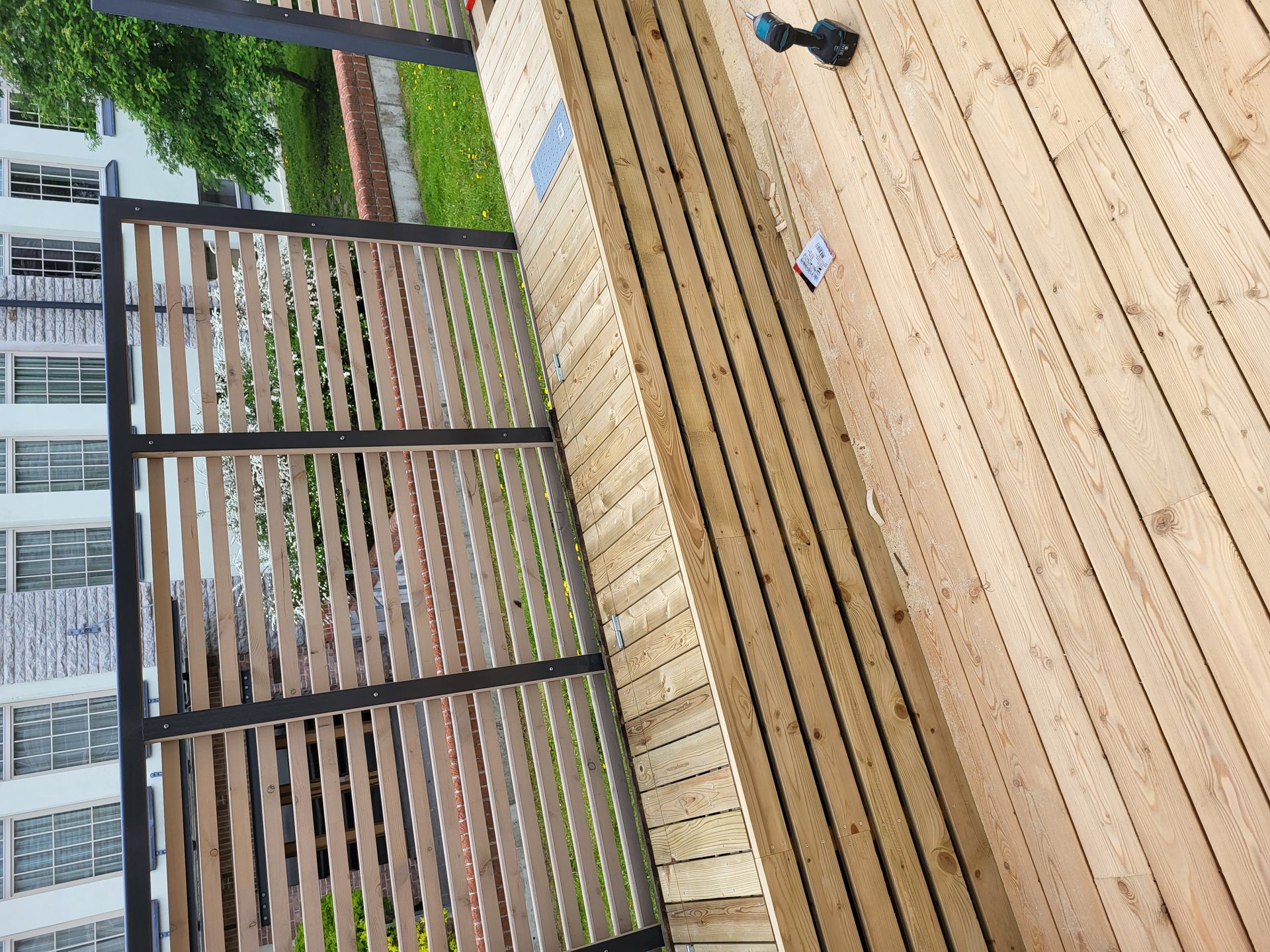
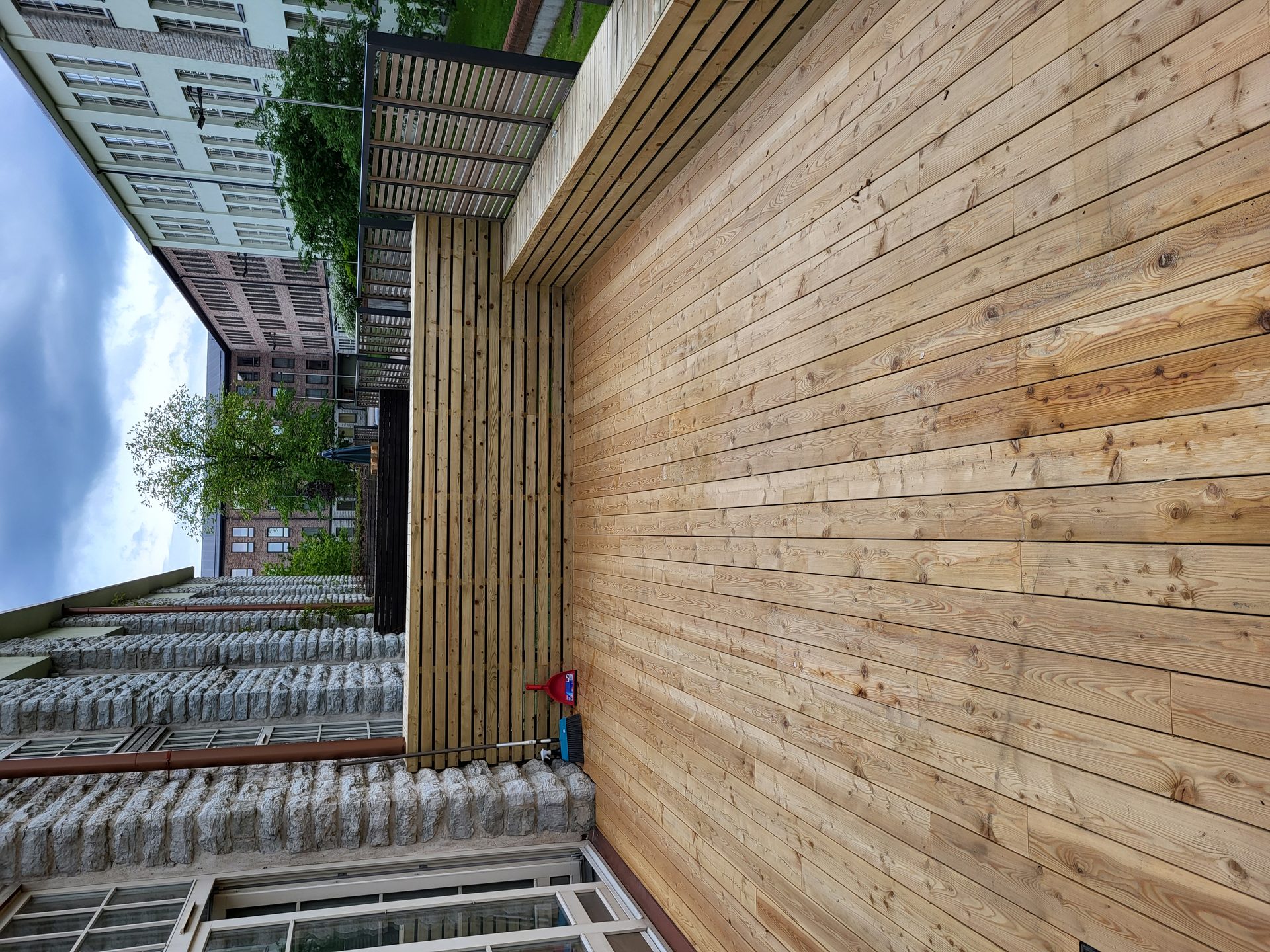
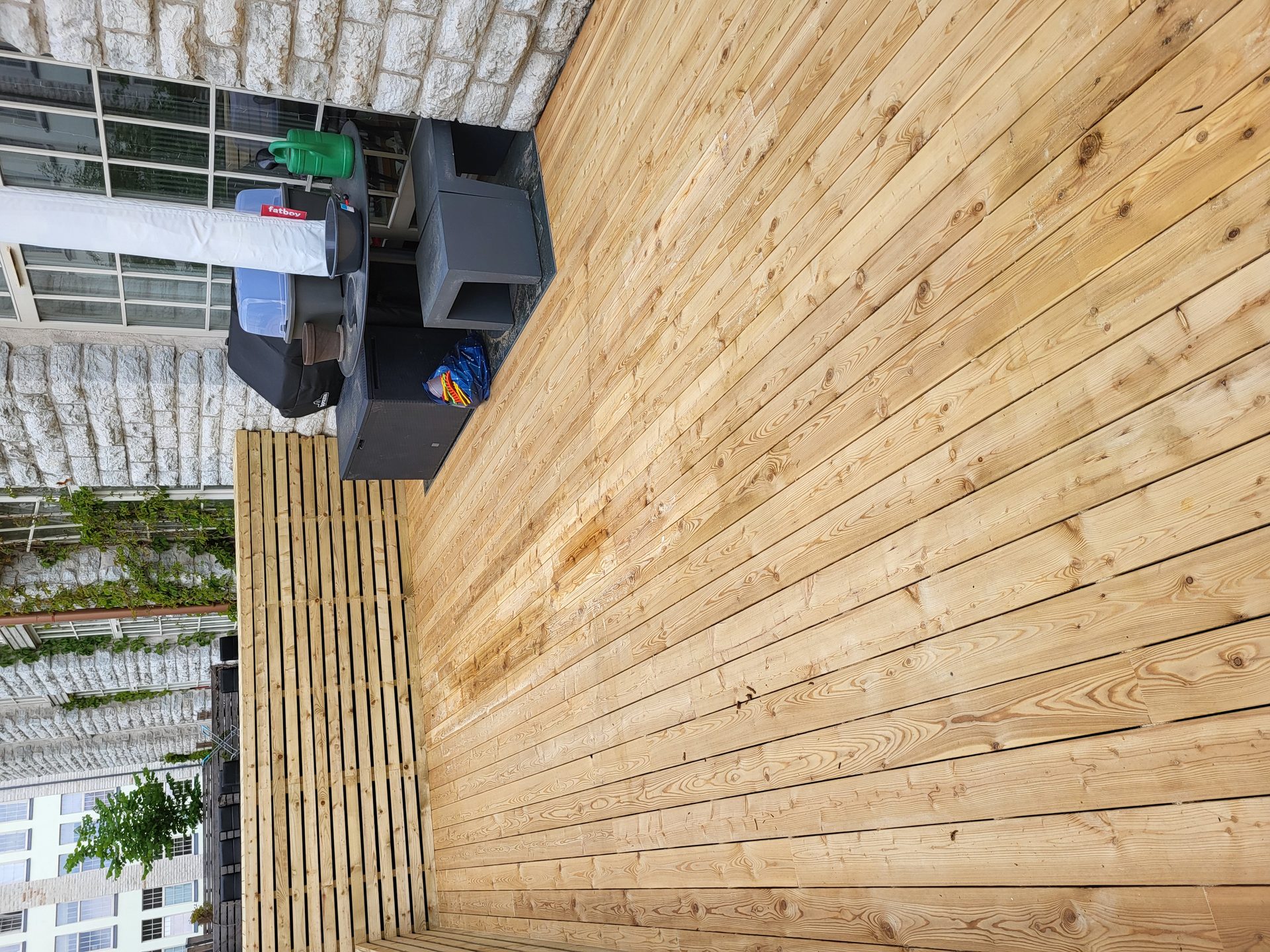
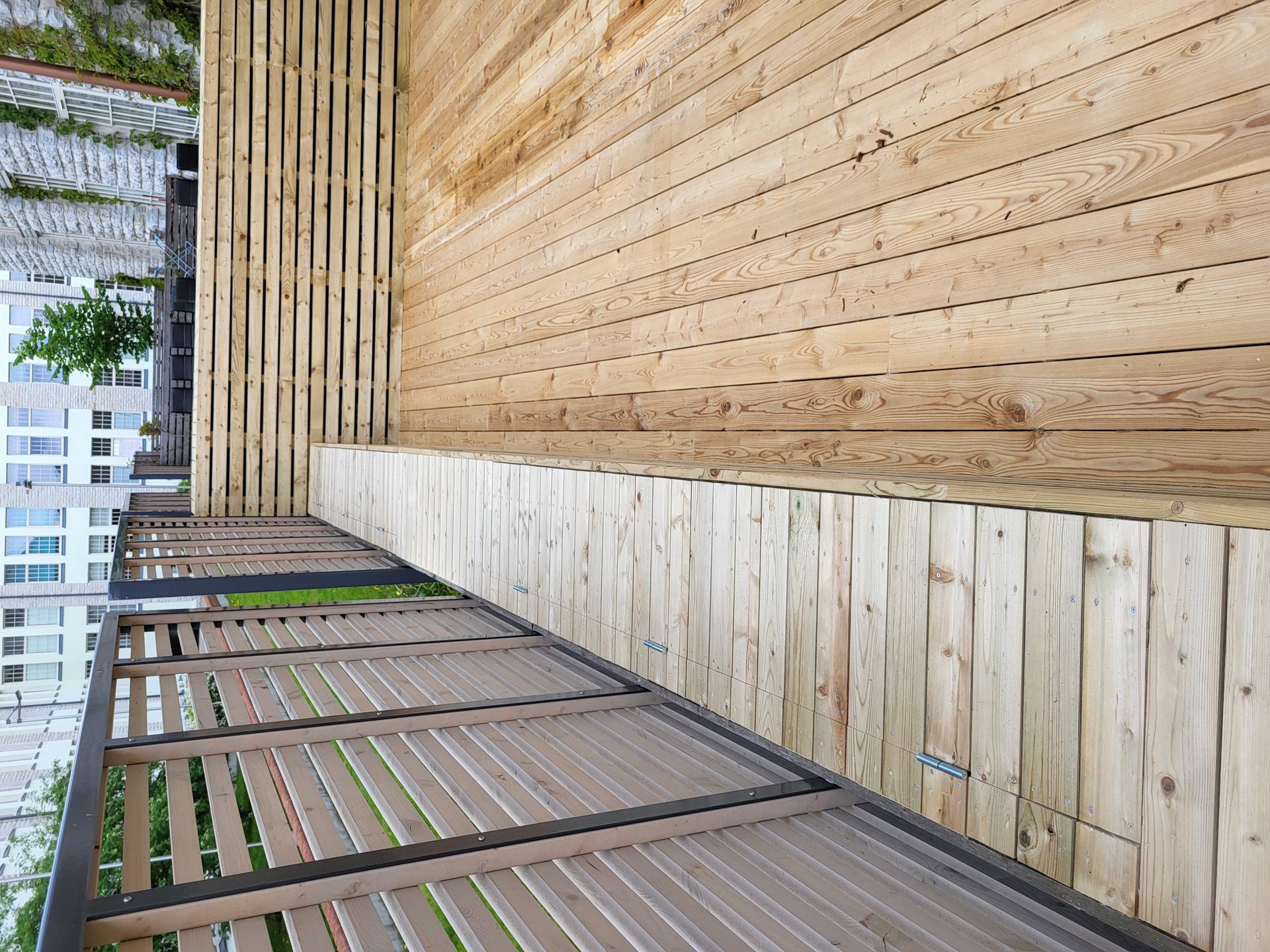
Next — the actual process of laying the decking.
Separately about fasteners — the client didn't cut corners here. He used screws from the Estonian company Essve, ESSDECK Max series, in stainless steel A4 execution (acid-resistant steel). The choice wasn't random, and here's why.
Larch is acidic wood. Those very natural resins and organic acids that protect it from rot simultaneously react aggressively with ordinary steel. Screw in a cheap black self-tapping screw — in a couple of seasons, black rust streaks will form around the head, and the screw itself may eventually crack from seasonal movement. That's why fastener manufacturers, including Essve, definitely recommend A4 stainless steel for larch.
Class A4 was originally developed for marine and chemically aggressive environments, so such screws are also suitable for docks, piers, and decking around pools. Essentially, one universal fastener covers several challenging scenarios at once — acidic wood, salt water, chlorine.
Why exactly ESSDECK Max and why countersunk? This screw's head is 25% smaller than standard and has a cylindrical shape with cutting notches. The notches neatly trim the fibers and don't lift them up — such a terrace is pleasant to walk on barefoot, without splinters around the fasteners. Plus, the screw has very high clamping force: it literally pulls a warped board to the joists, which is important for larch, which often comes with slight warping. The head sits flush with the surface — neither a depression where water collects, nor protruding metal.
One downside to these screws — they're very expensive.
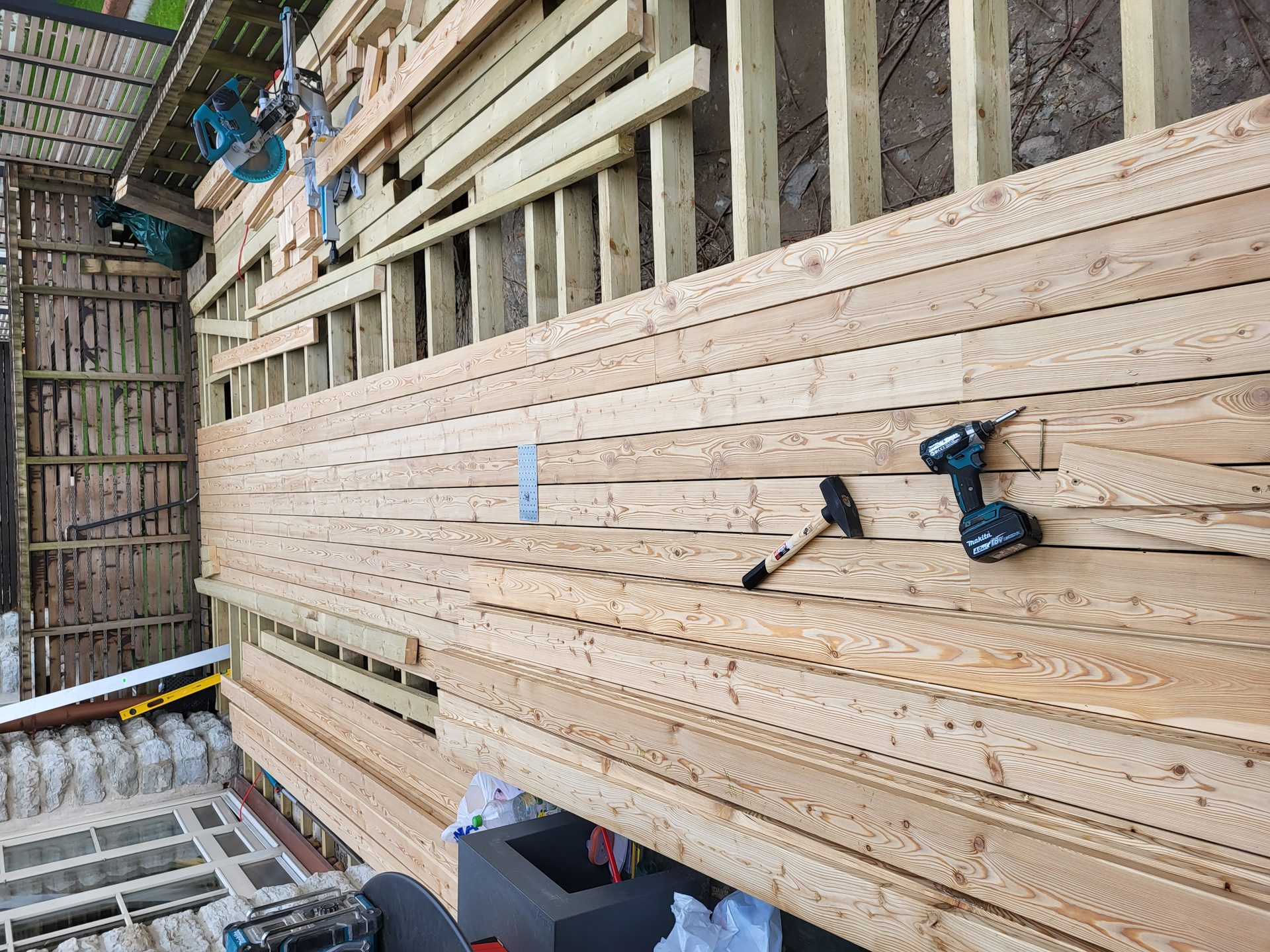
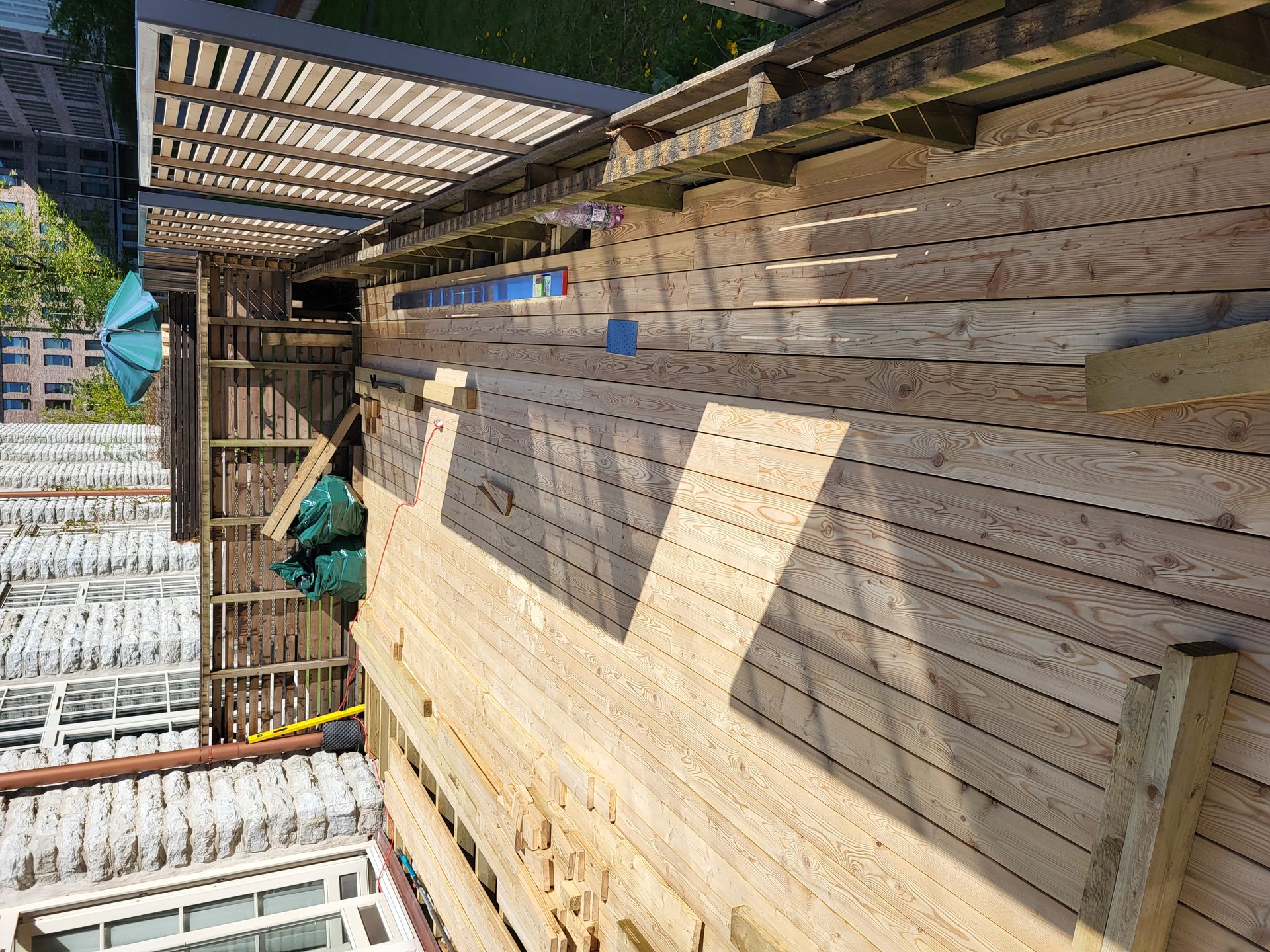
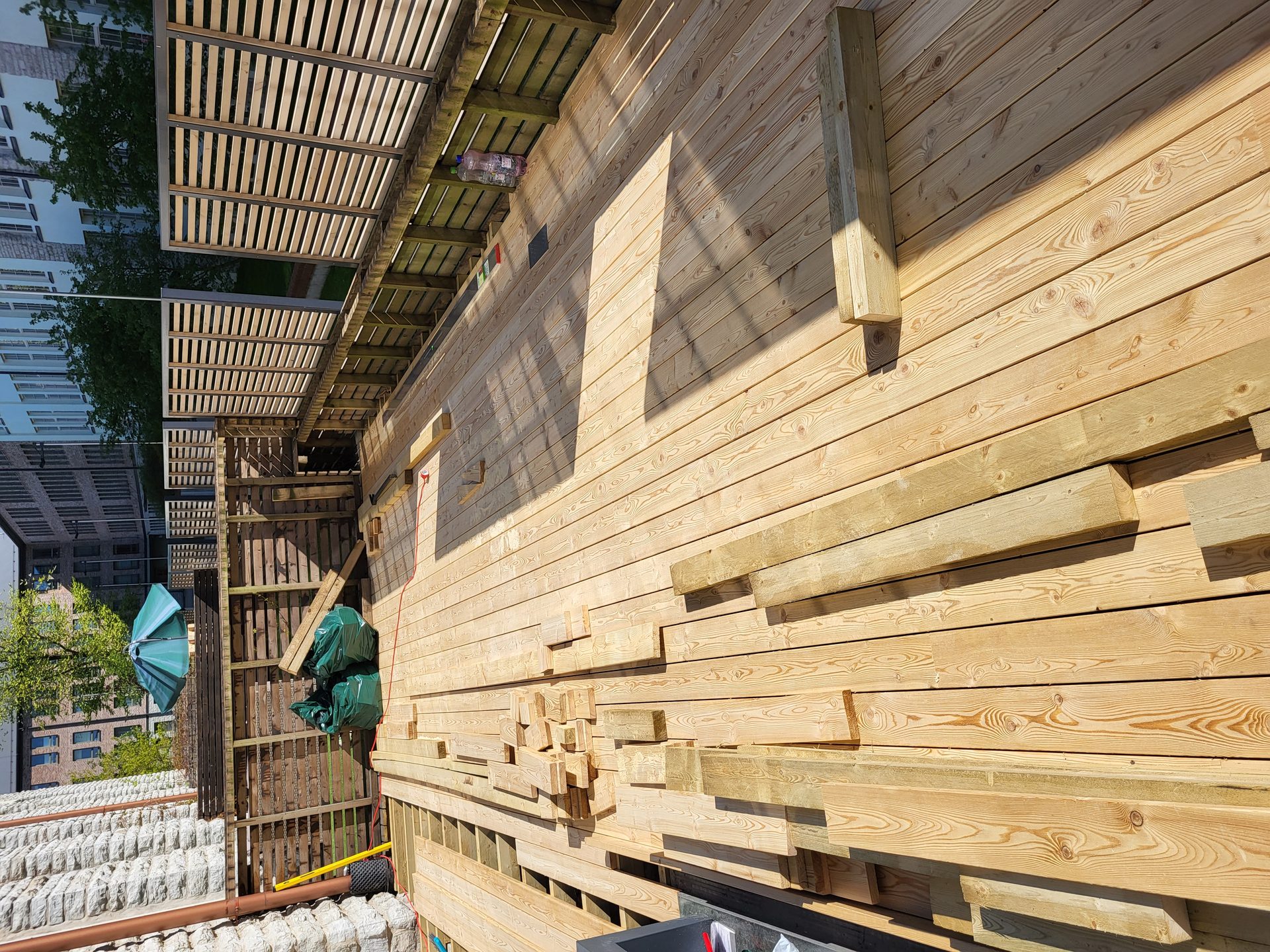
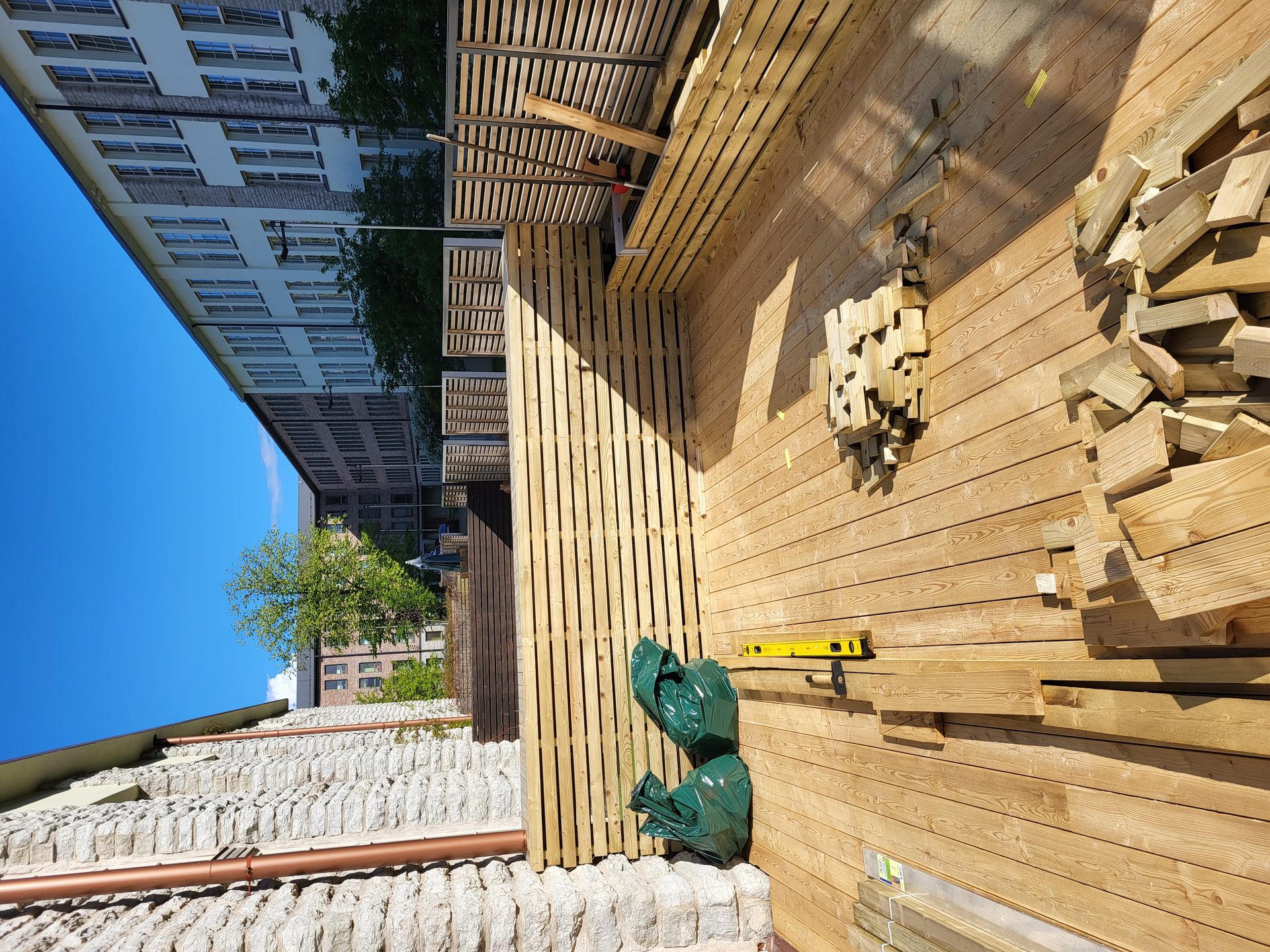
During the work, we also updated the terrace railings.
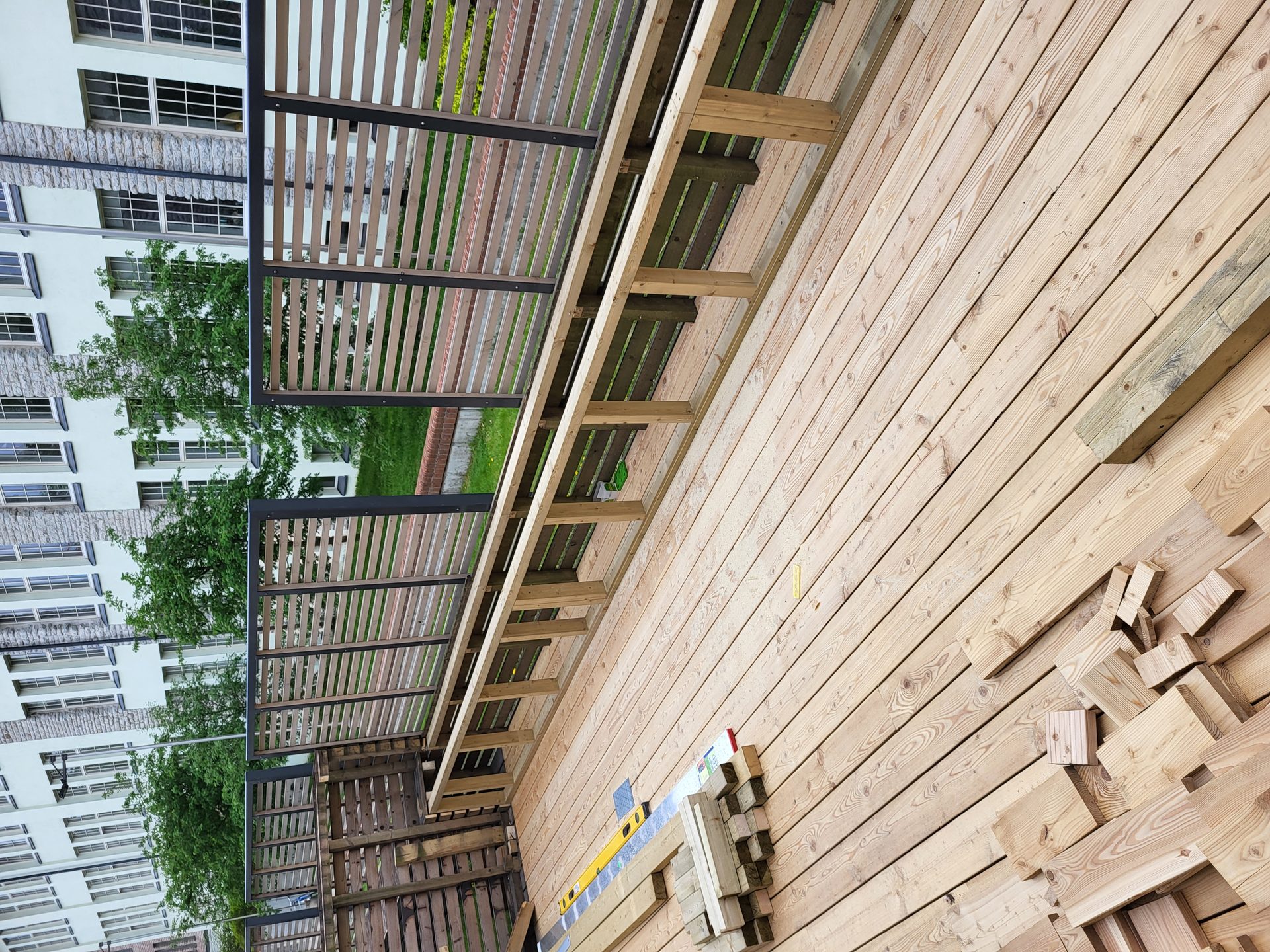
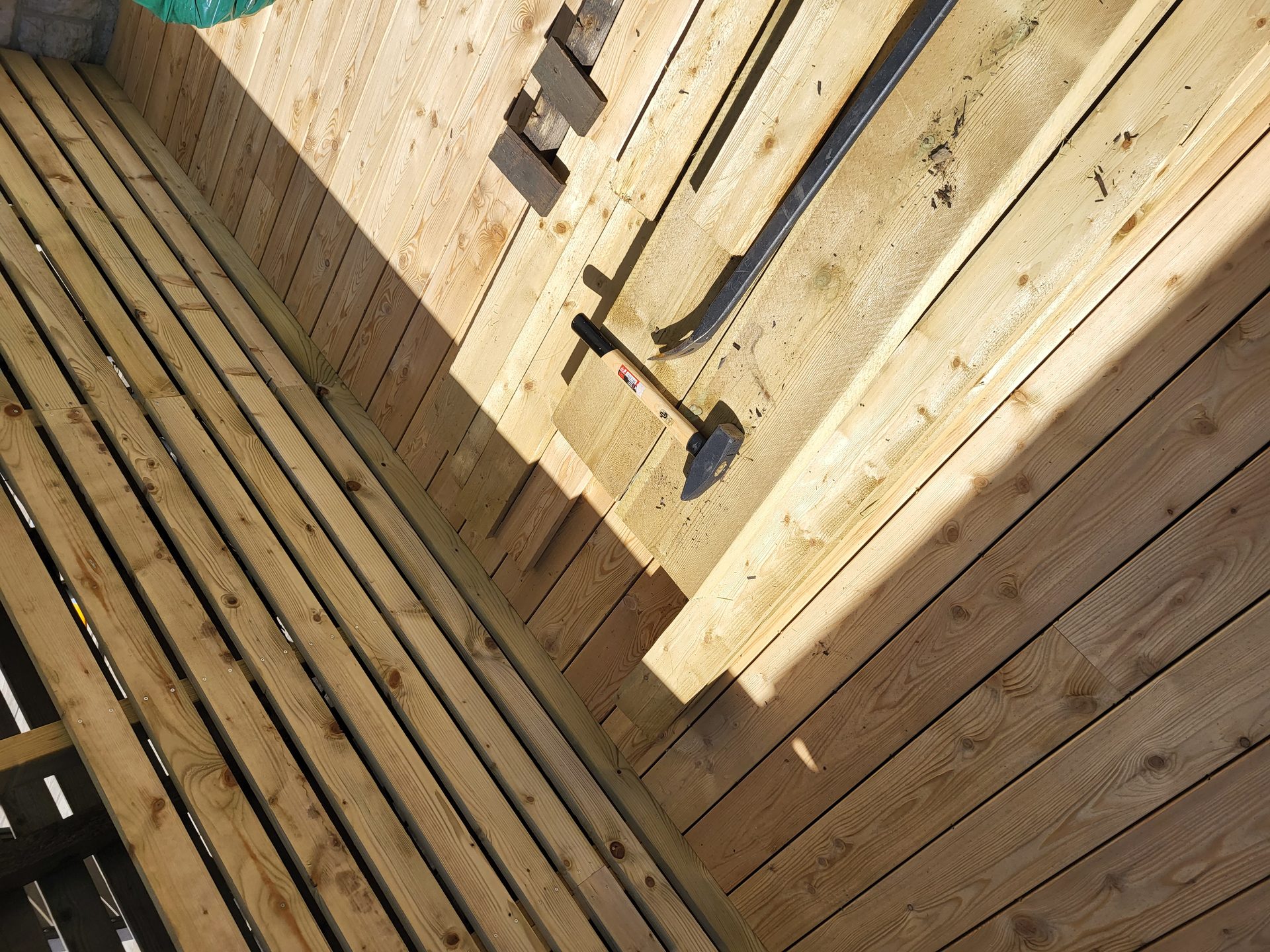
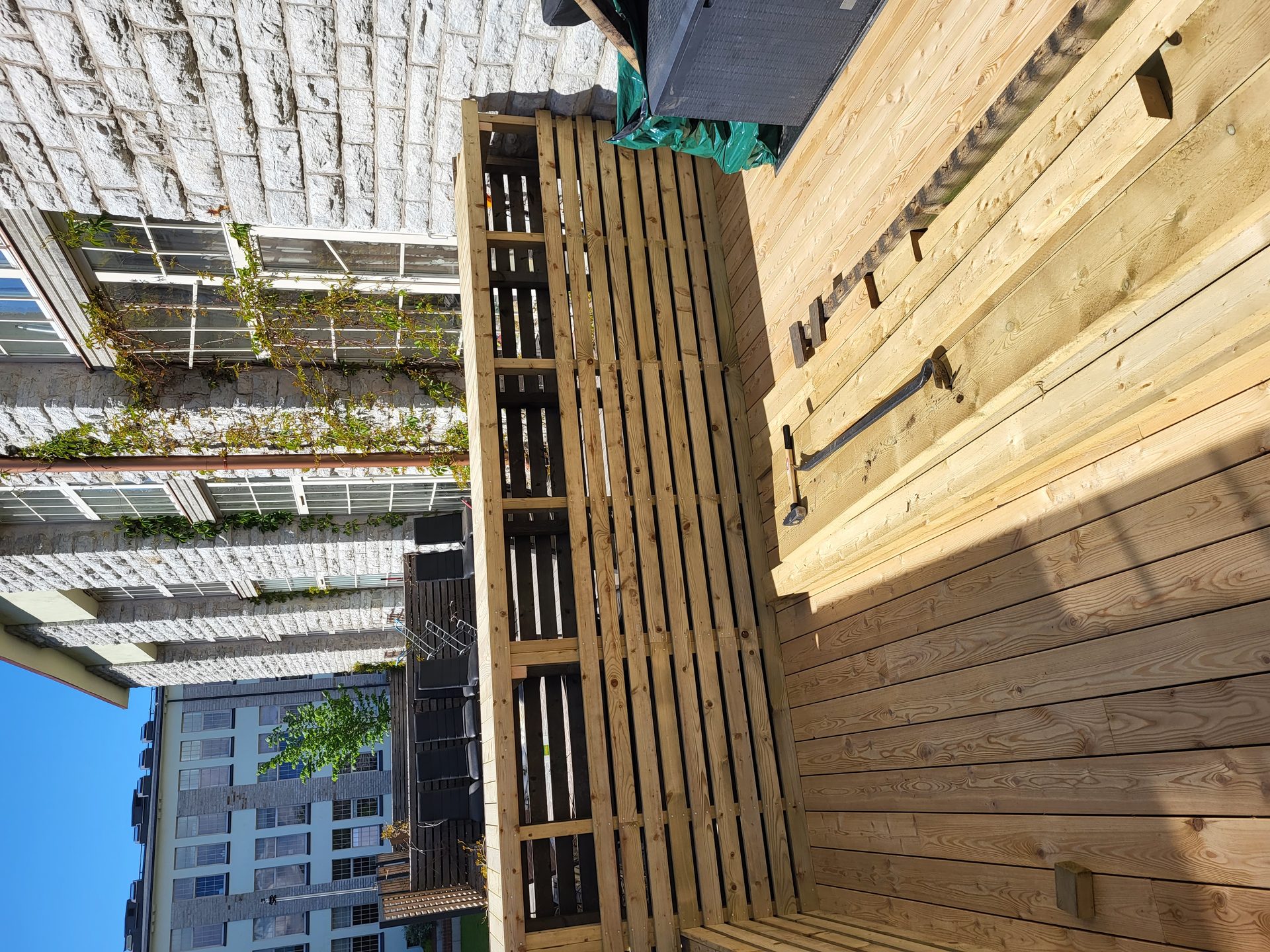
Write in the comments what you think about the terrace renovation!

No comments yet.