

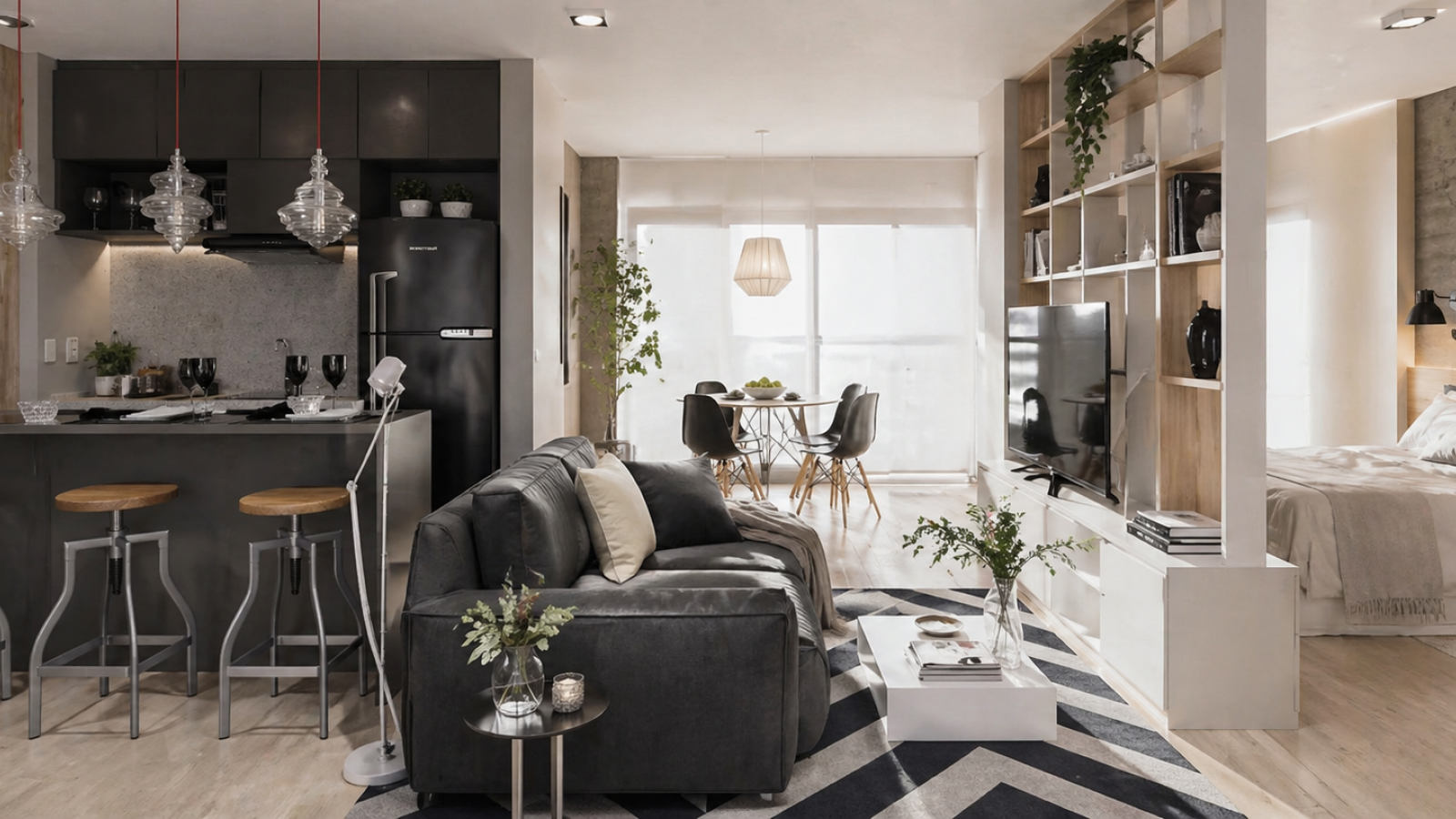
Studio Apartment: How to Divide Open Space
The problem with many studio apartments is the "furniture warehouse effect," when a bed, dining table, and work chair all end up in view at the same time.
The key task for designers is zoning space without building permanent walls. Not simply arranging furniture, but creating scenarios – where nighttime quiet begins, where work concentration is needed, where social life will take place. Properly structured zones are read by the brain as separate rooms, even if there isn't a single partition between them.
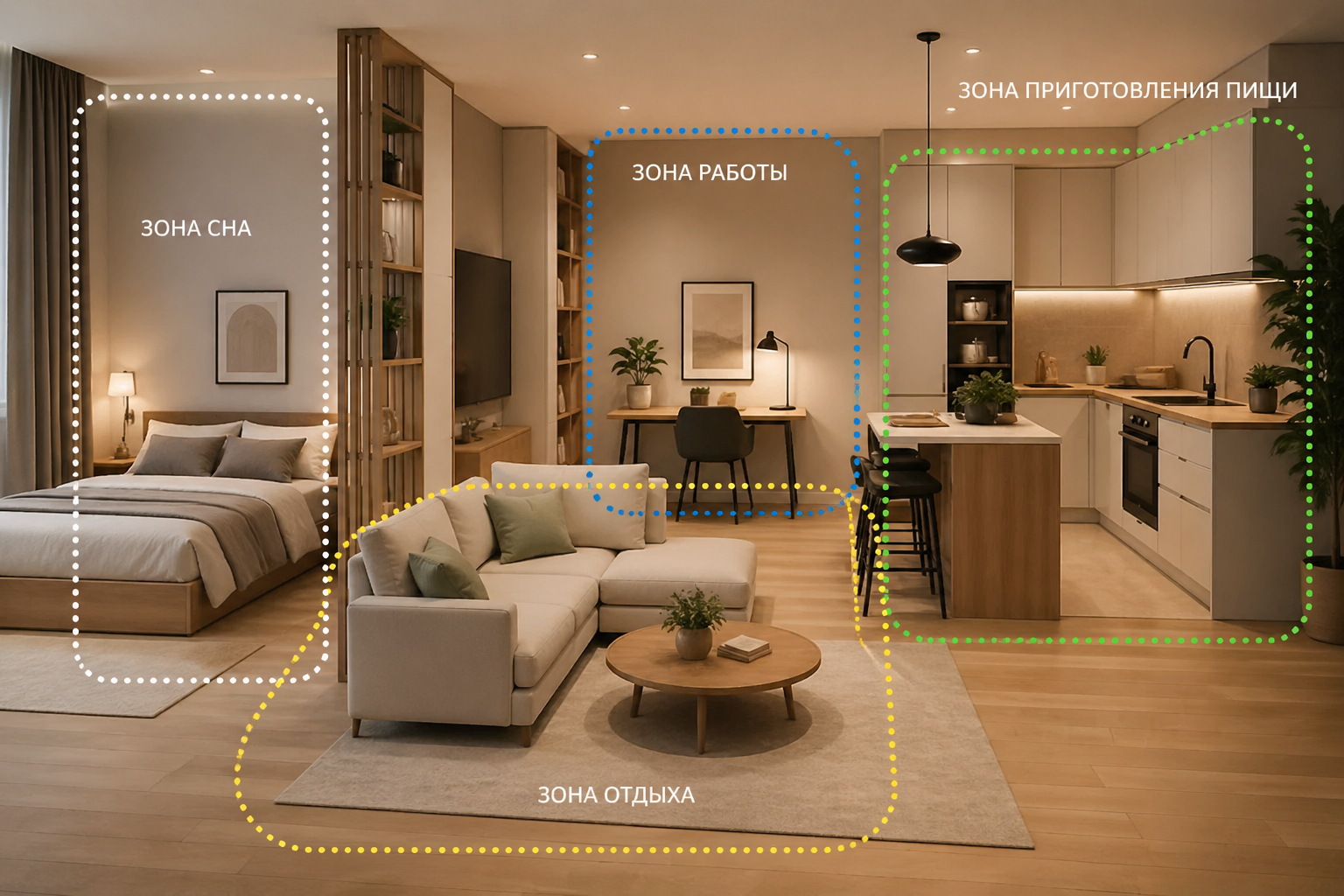
The main tool is not constructions, but the arrangement of elements that simultaneously organize space and solve practical tasks.
Clear Logic: Functions First
Experts recommend dividing a studio into three functional segments: allocate about 30% of the area for a sleeping zone, 40% for a living room, and 30% remains for the kitchen-dining area. This proportion maintains visual balance. Between zones, there must be free passages of at least 60–70 centimeters. Space without furniture in a studio is not emptiness, but a necessary resource.
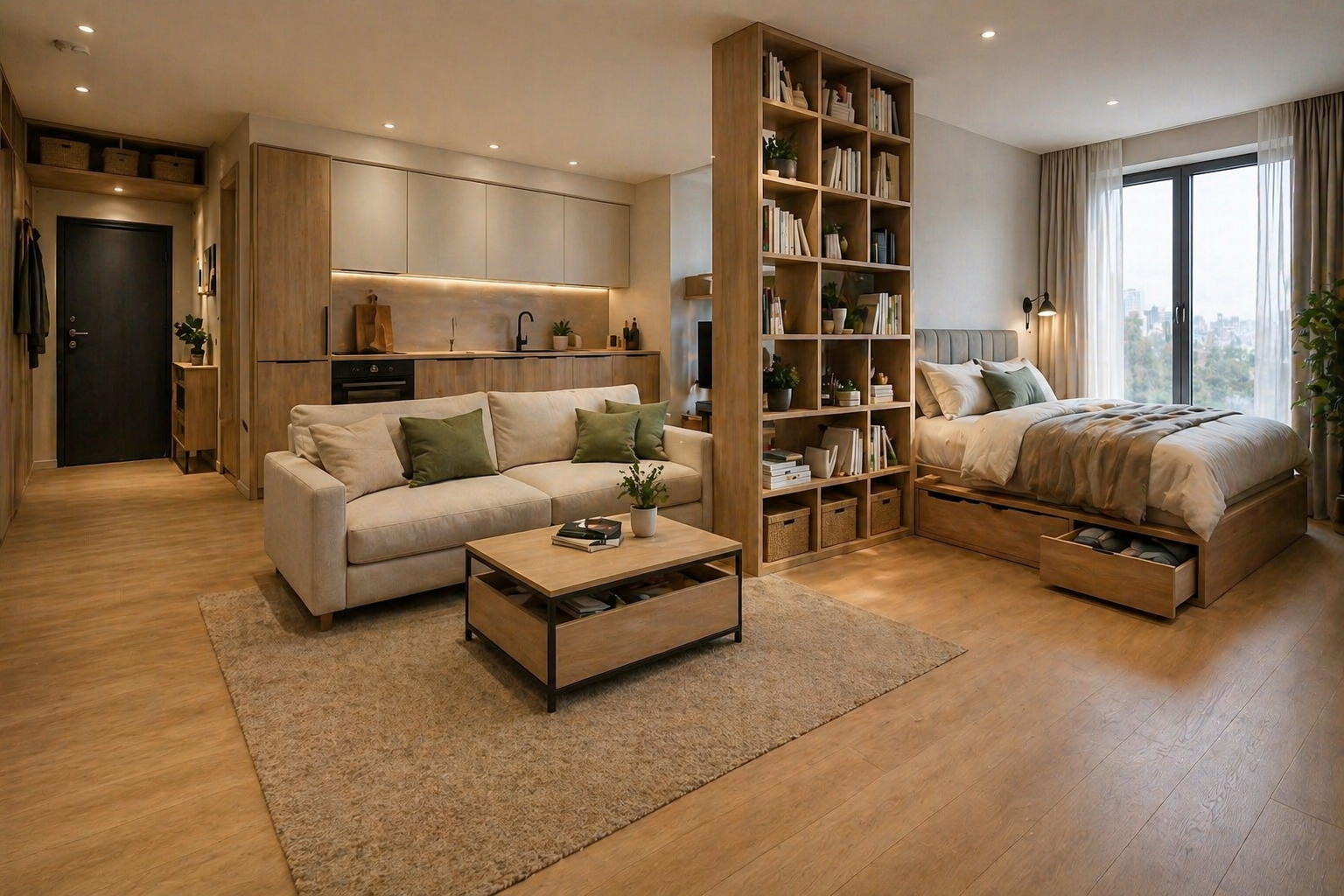
For rectangular studios, a linear scheme works: the sleeping zone, being the most private, is located at the far end, the living room in the center, the kitchen near the entrance. Square apartment layouts are more complex: here an L-shaped arrangement helps, where a sofa or shelving unit becomes the divider.
Working with Volume: Furniture as an Architectural Tool
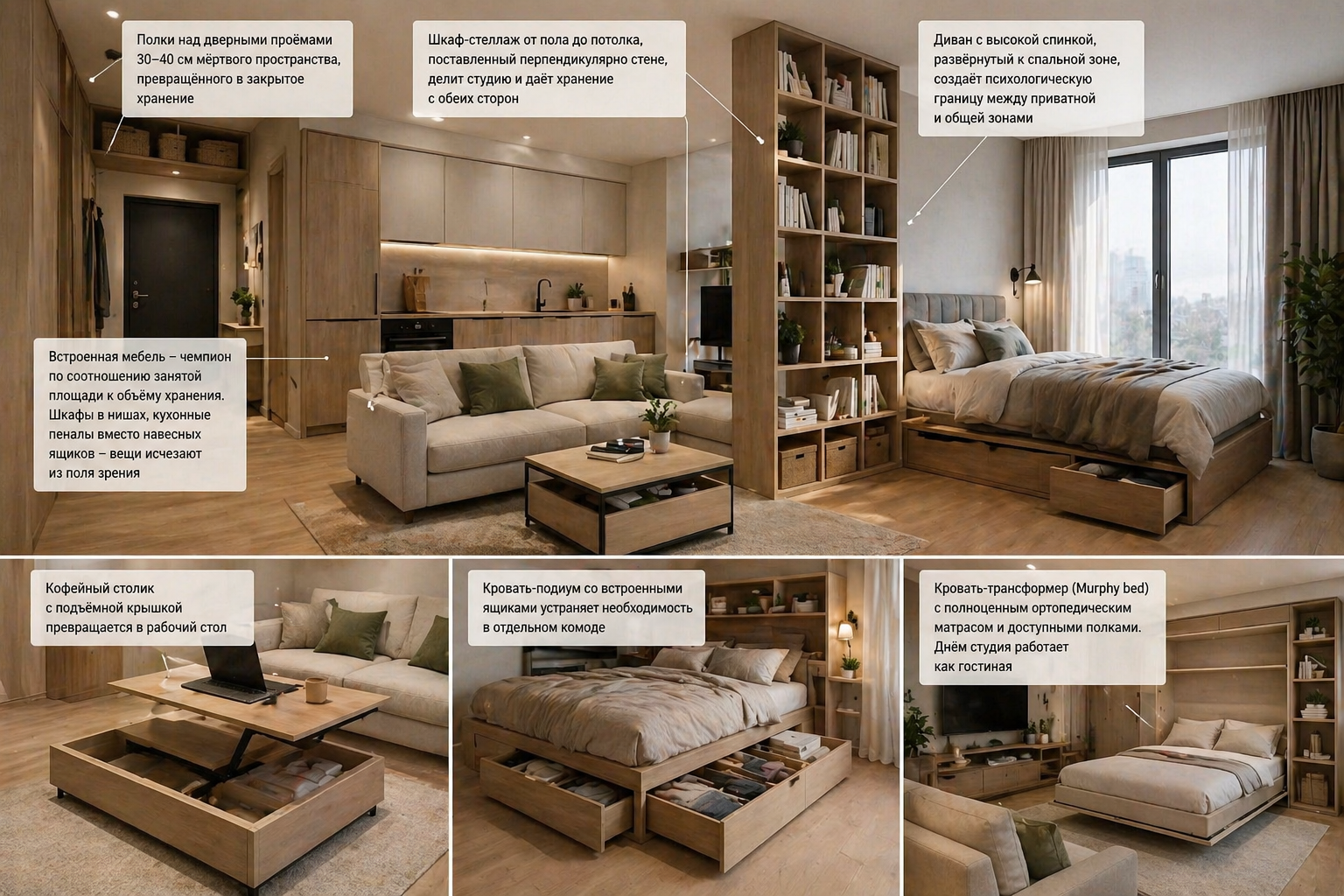
The main zoning tool is small apartment furniture that functions as structural elements. A through-shelf unit placed perpendicular to the wall divides a room as well as a drywall partition would. Simply turning a sofa with its back to the kitchen will mark the boundary between the kitchen and living room.
Organizing storage in a small apartment is another major challenge. Built-in furniture is the undisputed champion in terms of occupied space to storage volume ratio. Floor-to-ceiling cabinets in alcoves, shelves above doorways, kitchen tall units instead of traditional wall cabinets – things disappear from view without disappearing from your life. Built-in systems custom-ordered for specific spaces provide up to 40% more useful volume thanks to non-standard angles and configurations.
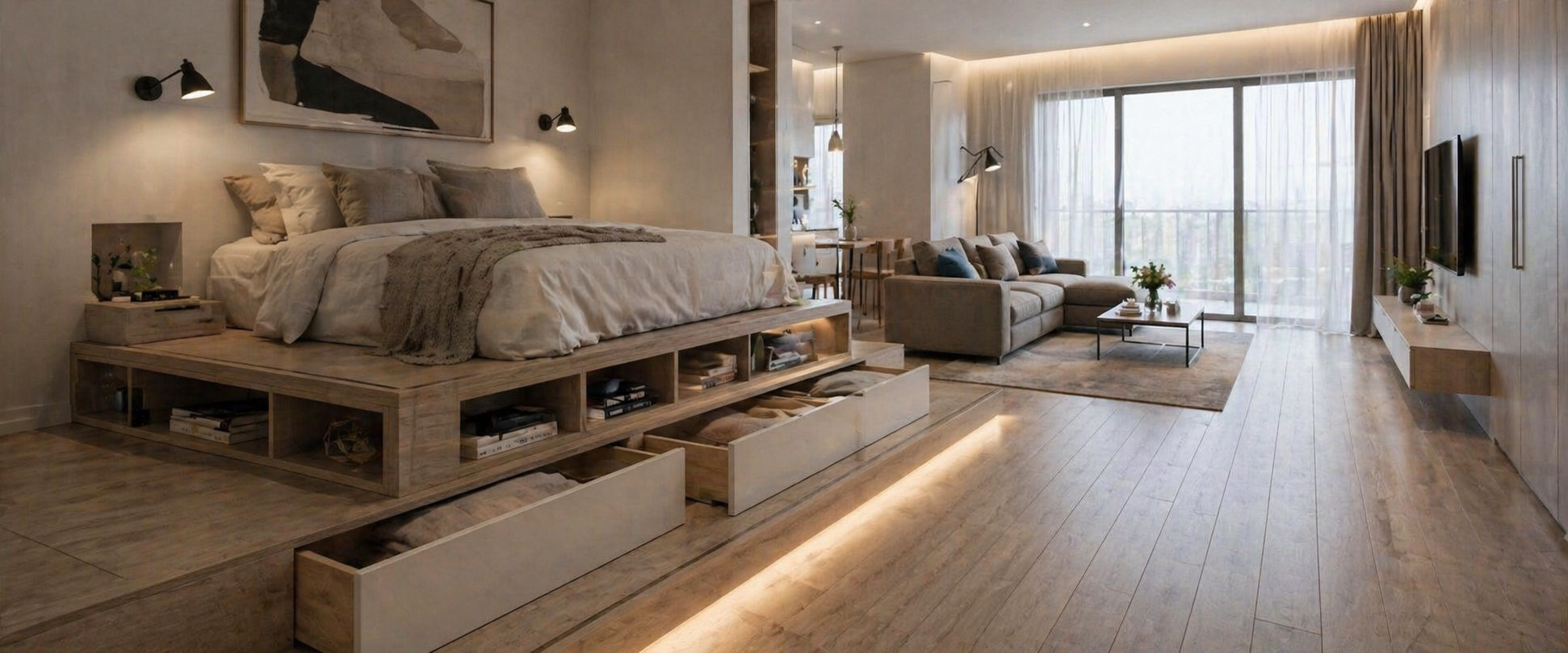
Multi-functional and multi-purpose furniture takes center stage. A coffee table with a lift-top transforms into a work desk. A platform bed with built-in drawers eliminates the need for a separate dresser.
Light, Color, and Tactile Boundaries
A single ceiling light fixture in a studio is a design disaster. The professional standard for 2026: each functional zone has its own light source with independent control. Diffuse overhead lighting for general use, spotlights above the work area, wall sconces by the bed, a pendant light above the dining table.
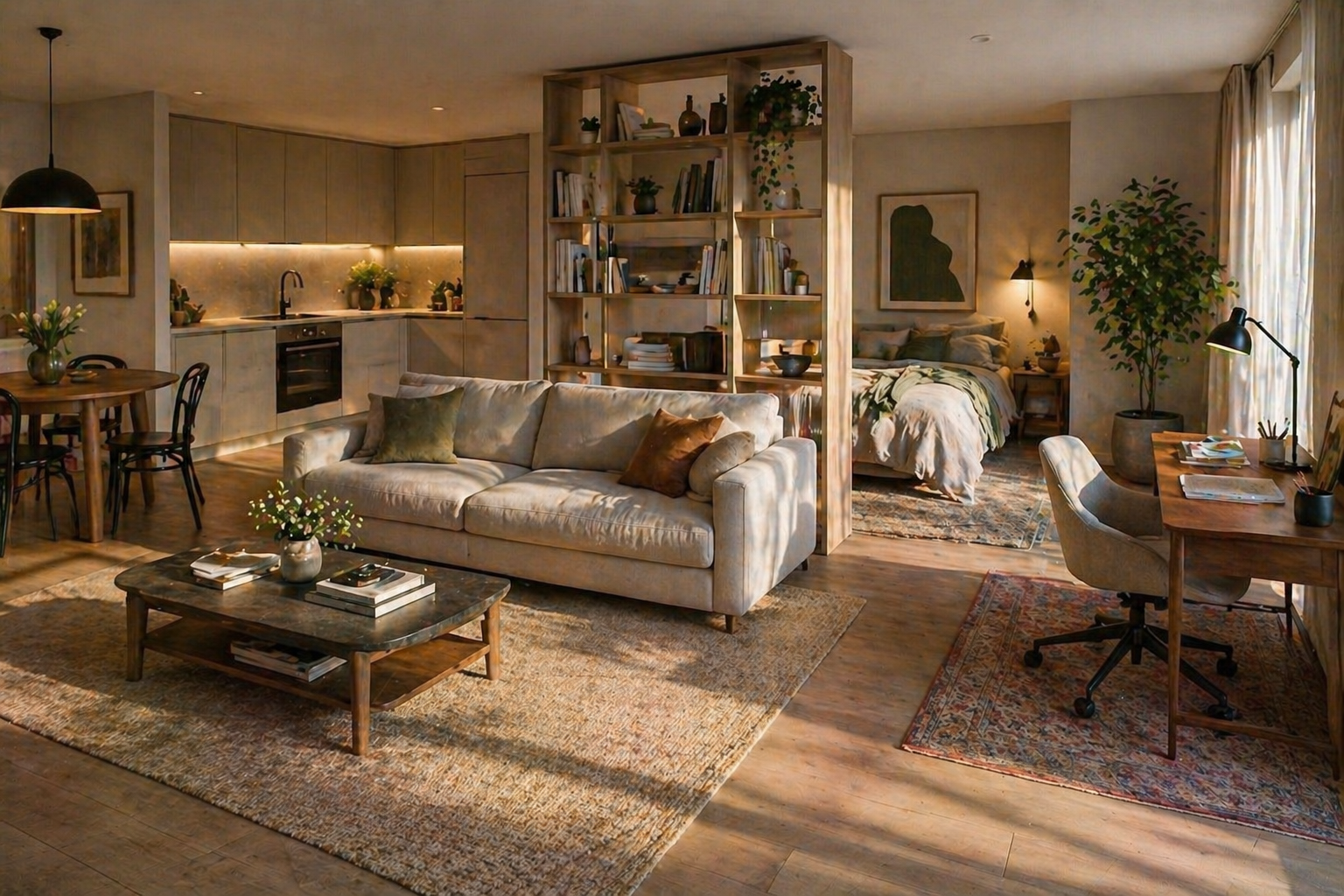
Color combinations in studio interiors require special precision. Basic principle: a unified neutral palette throughout the area creates background unity. Accent color is applied only in one zone – and it's precisely what marks it. A dark blue wall behind the bed headboard will unmistakably highlight the sleeping zone. 2026 trends include cocoa, taupe, sage green, and olive tones. Designers call this approach "emotionally-oriented color choice."
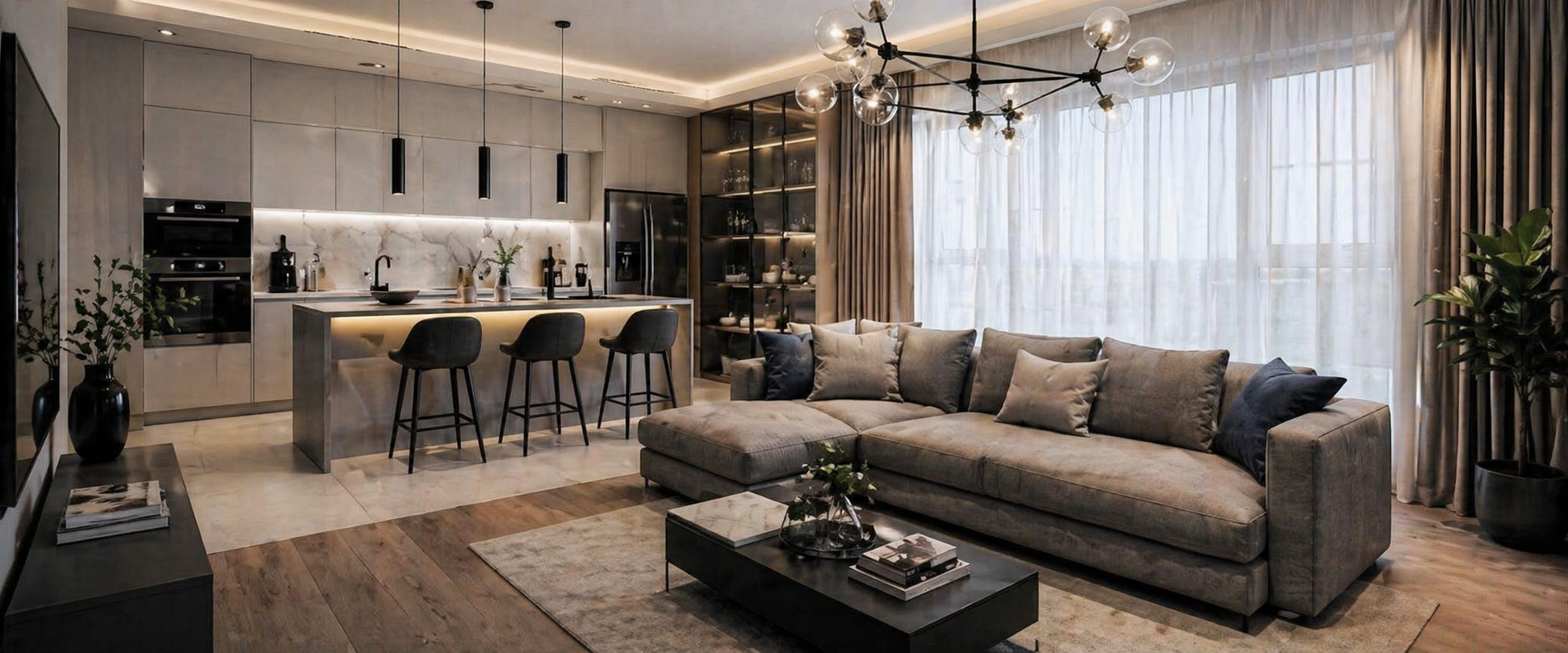
A change in flooring – from laminate to tile – marks the transition between zones without any partitions. This technique came to compact studios from loft interiors, where designers have spent decades working with open space through materials and textures. Today, layered surfaces are relevant: stone, linen, wood, matte metal – each zone gets its own tactile dominance.
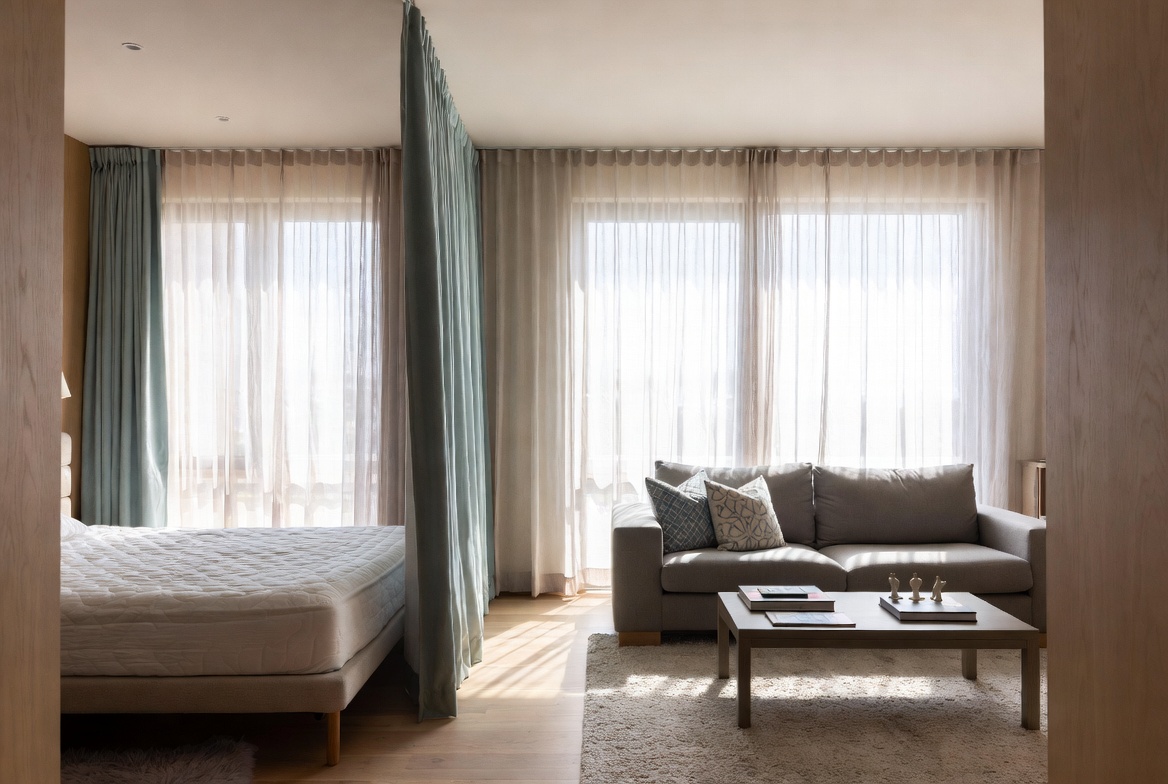
Three physical zoning tools that work reliably:
● Rugs – a 160×230 rug under the sofa defines the living room; a 120×180 rug under the bed defines the bedroom. Open flooring should remain between them: this "gap" functions as a hallway.
● Curtains on ceiling tracks – a ceiling track rail allows you to close off the sleeping zone with linen or heavy fabric; the cost is incomparably lower than a partition.
● Podium – a raised platform 15–30 centimeters high under the bed creates an architectural level change that reads as a change in room; inside there's enough space for various items.
Work Zone and Final Logic
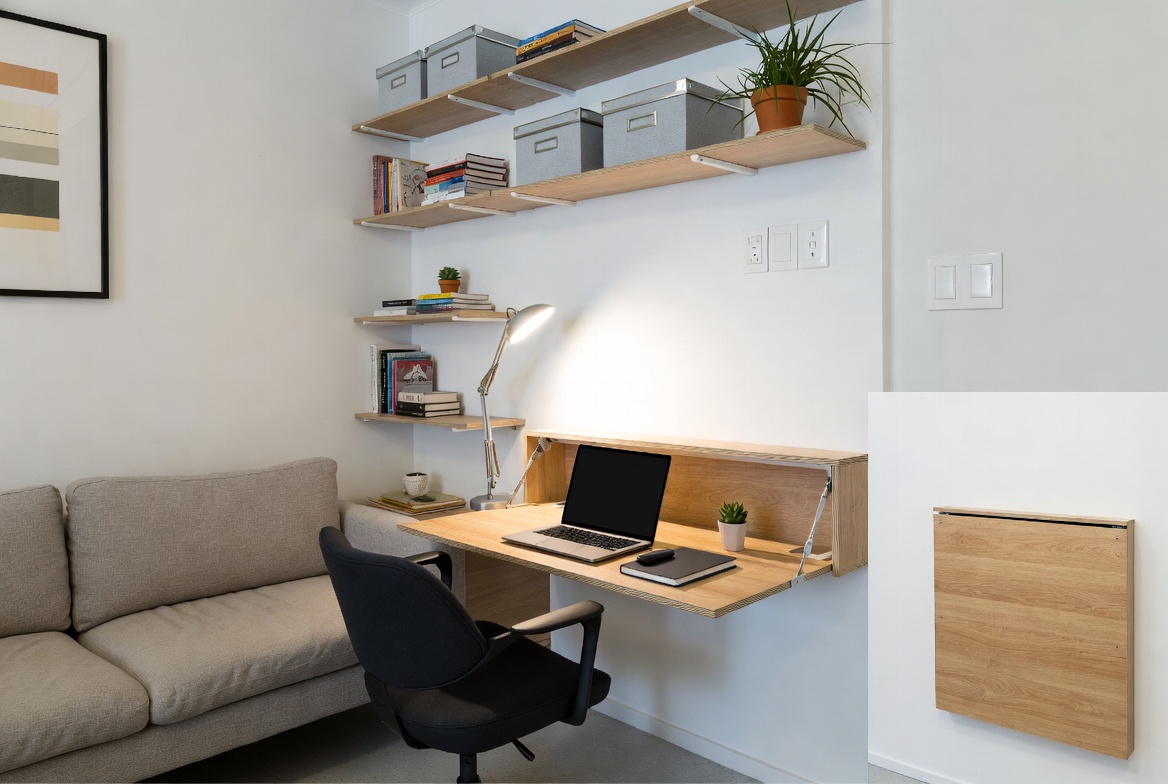
Remote work has solidly become the norm, and a workspace in a studio has become a mandatory, not optional, element. The main problem is psychological: when a work desk is next to a bed, it's hard for the brain to "switch off" in the evening. Solution: a work zone facing away from the bedroom, cold light (5000K versus 3000K by the bed), a small shelf between the desk and bed. A wall-mounted fold-down desk on hinges is an elegant solution for studios up to 30 square meters: open during work hours, folded flush with the wall otherwise.
Modern studio design is not a set of life hacks, but a consistent system. Zones are built in layers: first light and furniture, then rugs, color, and materials. Each layer reinforces the previous one. A studio of 35 square meters can function as a three-room apartment – not through illusion, but through clear scenario logic. The leading trend in this area is "quiet expressiveness": spaces that feel calm, tactile, and deeply personal. Not a "wow effect" upon entry, but the desire to stay here as long as possible.


No comments yet.